
Stinging Insects: Identification, Pictures and Treatment
How to tell wasps, hornets and bees apart, and which nests around your Bowling Green home need attention
What Do Stinging Insects Look Like?
Types of Stinging Insects in Bowling Green
These are the wasps, hornets and bees we find around Bowling Green homes. Tap a picture to jump to it.
Stinging Insect Facts
- Order:
- Hymenoptera
- Size:
- 1/2 inch to 1 1/2 inches
- Legs:
- 6
- Wings:
- 4, with the front pair larger
- Who stings:
- Only females. The stinger is a changed egg-laying tube
- Diet:
- Nectar, sweets and other insects fed to the young
- Season:
- Most active April to October, peaking in late summer
- Common in Bowling Green:
- 8 kinds
Have a stinging insect problem that needs fixing?
Table of Contents
- What do stinging insects look like?
- Types of stinging insects in Bowling Green
- How to identify stinging insects
- If you're stung
- 1. Yellowjacket
- 2. European Paper Wasp
- 3. Bald-Faced Hornet
- 4. European Hornet
- 5. Mud Dauber
- 6. Carpenter Bee
- 7. Cicada Killer
- 8. Honey Bee
- Life cycle of stinging insects
- Stinging insect look-alikes
- Signs of a stinging insect problem
- How to keep stinging insects out
- How we get rid of stinging insects
From late spring until the first hard frost, wasps, hornets and bees are some of the most common calls we get in Bowling Green. Most are helpful pollinators or predators of other insects, but a nest by a door, deck or play set can mean painful stings.
Some kinds rarely sting and can be left alone. Others, like yellowjackets, defend their nests aggressively and sting again and again. This page shows the stinging insects we see most around Warren County and how to tell which one you have.
How to Identify Stinging Insects
Wasps, hornets and bees all have the same basic body plan: a head with two antennae, a thorax that carries six legs and four wings, and an abdomen joined to the thorax by a narrow waist. In females, the tip of the abdomen holds the stinger.
Wasps and hornets are usually smooth and shiny with a thin waist and bright warning colors. Bees are fuzzier and rounder, with hairs that pick up pollen. Mud daubers and paper wasps have long, dangling legs in flight, while yellowjackets fly fast with their legs tucked in.
The nest is often the easiest way to tell them apart. Paper wasps build open, umbrella-shaped combs. Yellowjackets nest in the ground or in walls. Bald-faced hornets build gray paper footballs in trees. Mud daubers make tubes of mud, and carpenter bees drill perfectly round holes in wood.
What to Do If You're Stung
Most stings cause pain, redness and swelling that go away in a few hours to a day. For people who are allergic, a single sting can be life-threatening. Here's what to do.
Move away
Walk away from the nest calmly but quickly. Yellowjackets and hornets give off an alarm scent when they sting that calls more of them to attack.
Remove the stinger
Honey bees leave their stinger behind. Scrape it out sideways with a fingernail or card as soon as you can. Wasps and hornets keep their stingers.
Clean and cool it
Wash the sting with soap and water and hold a cold pack on it for 10 minutes to cut swelling. An antihistamine or pain reliever can help.
Watch for an allergic reaction
Call 911 right away for trouble breathing, swelling of the face, lips or throat, hives spreading over the body, dizziness or a racing heartbeat. Anyone with a known allergy should use their epinephrine pen.
A Closer Look at Each Type
1. Yellowjacket
Vespula species
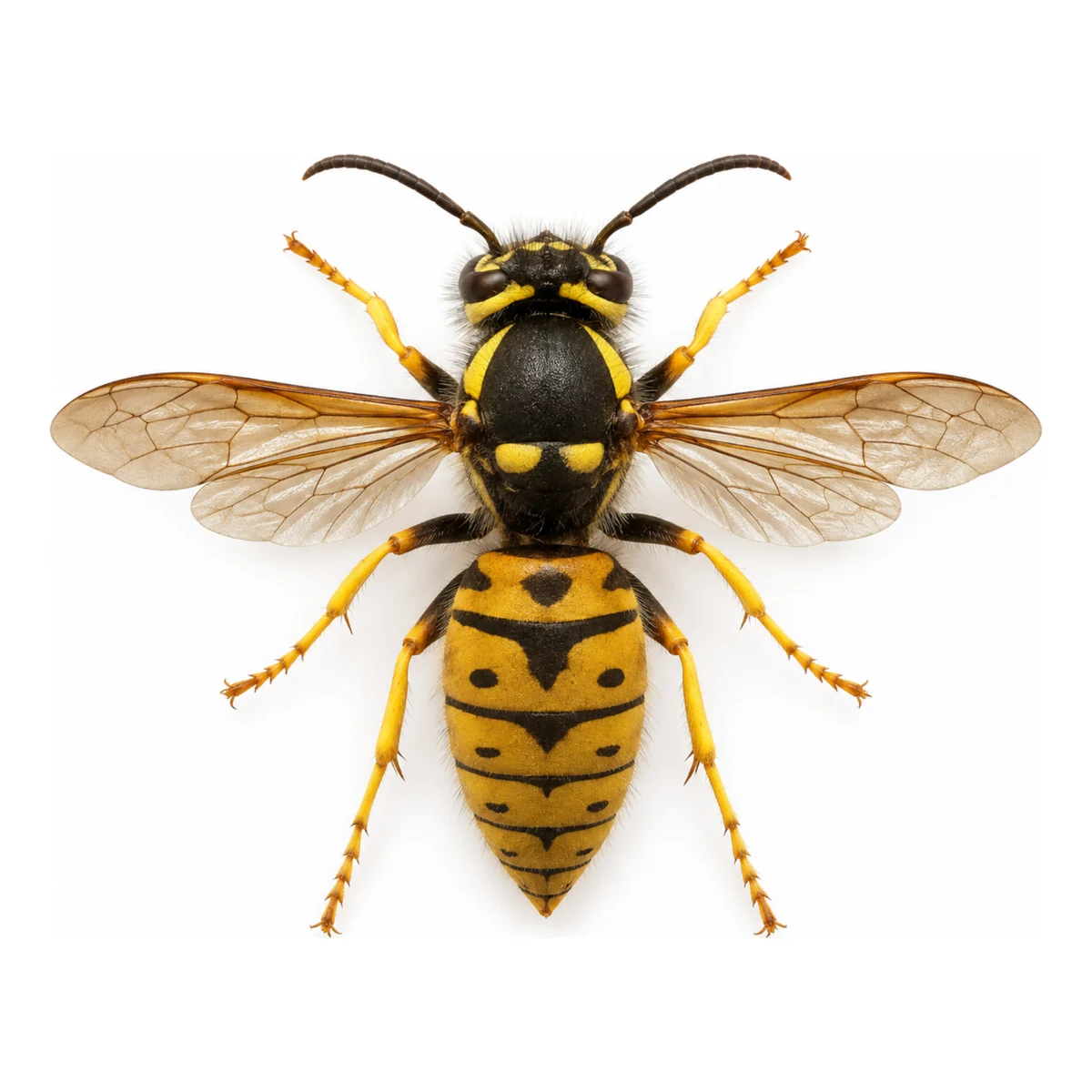
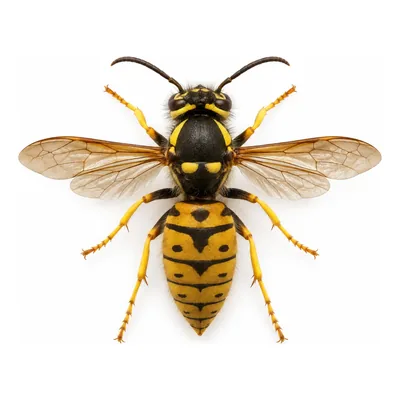
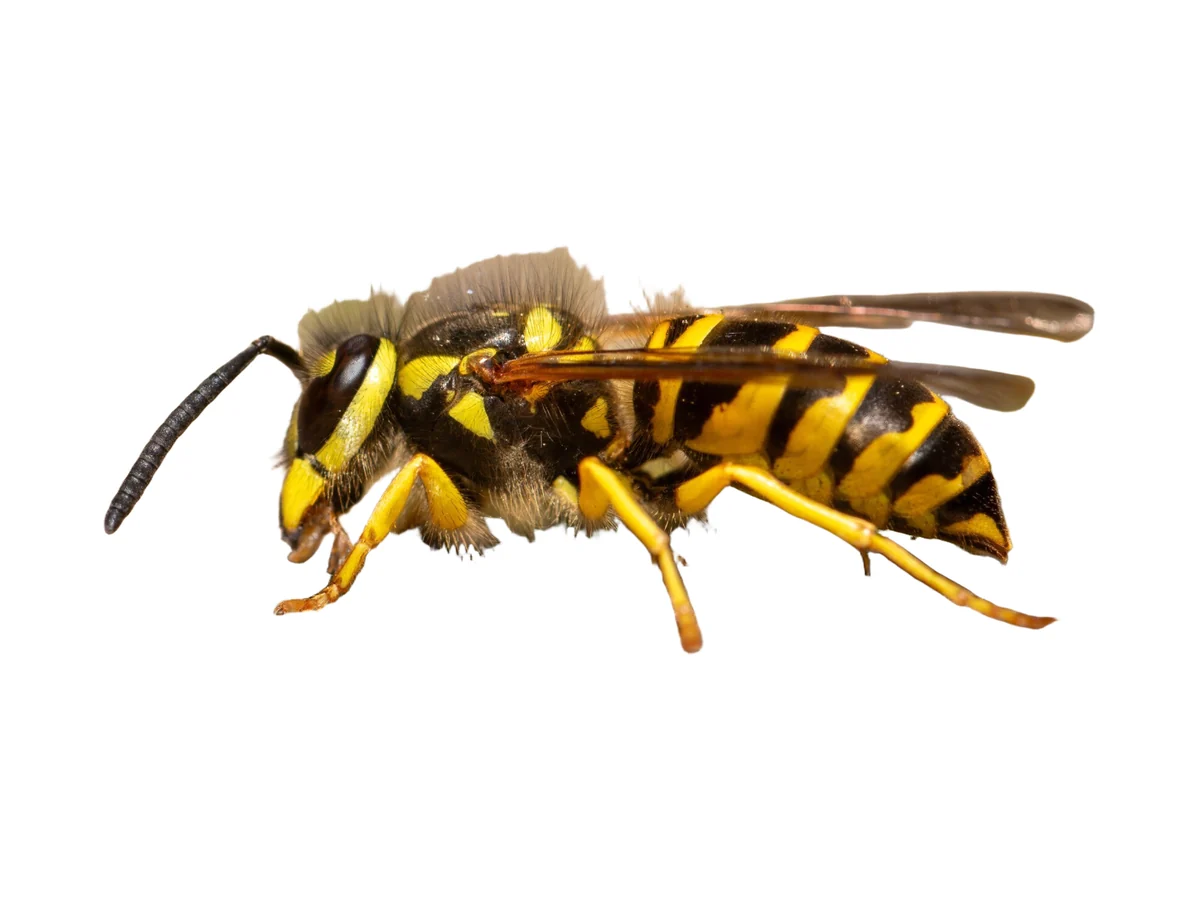
A compact, smooth wasp with bright yellow and black bands. It flies fast and side to side, often around trash cans, drinks and picnics in late summer. Ground nests have one small entrance hole with a steady stream of workers going in and out.
Size: 1/2 to 5/8 inch
Where you'll find them: Underground nests in lawns and flower beds, and inside wall voids, attics and crawl spaces
Why it matters: The most dangerous stinging insect in Bowling Green. Colonies reach thousands by fall and defend the nest in swarms. Mowing over a ground nest is one of the most common ways people get stung many times.
Read the full Yellowjacket guide2. European Paper Wasp
Polistes dominula
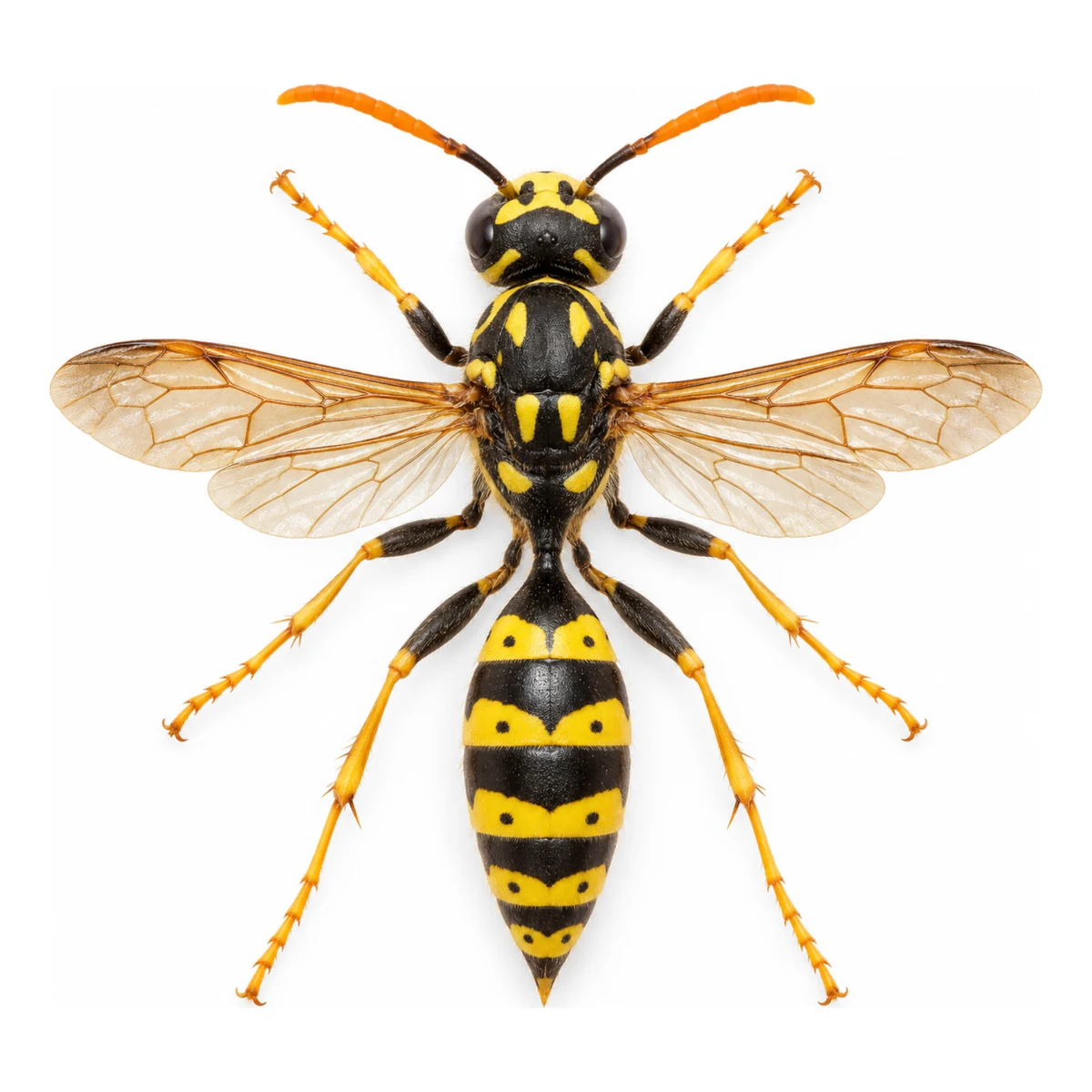
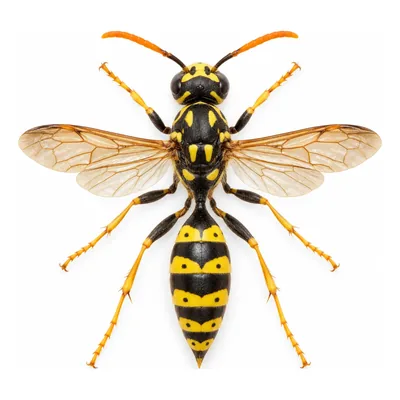
One of the most common paper wasps around Bowling Green homes. It's black and yellow like a yellowjacket, but slimmer, with a thin waist, orange antennae and long orange legs that hang down when it flies. We also see native brown and red paper wasps. All of them build an open, gray paper comb shaped like an upside-down umbrella, with the cells facing down.
Size: 3/4 to 1 inch
Where you'll find them: Under eaves, porch ceilings, deck railings, shutters, grills and play sets
Why it matters: Not usually aggressive away from the nest, but will sting to protect it. Nests by doors and walkways are the main problem.
Read the full European Paper Wasp guide3. Bald-Faced Hornet
Dolichovespula maculata
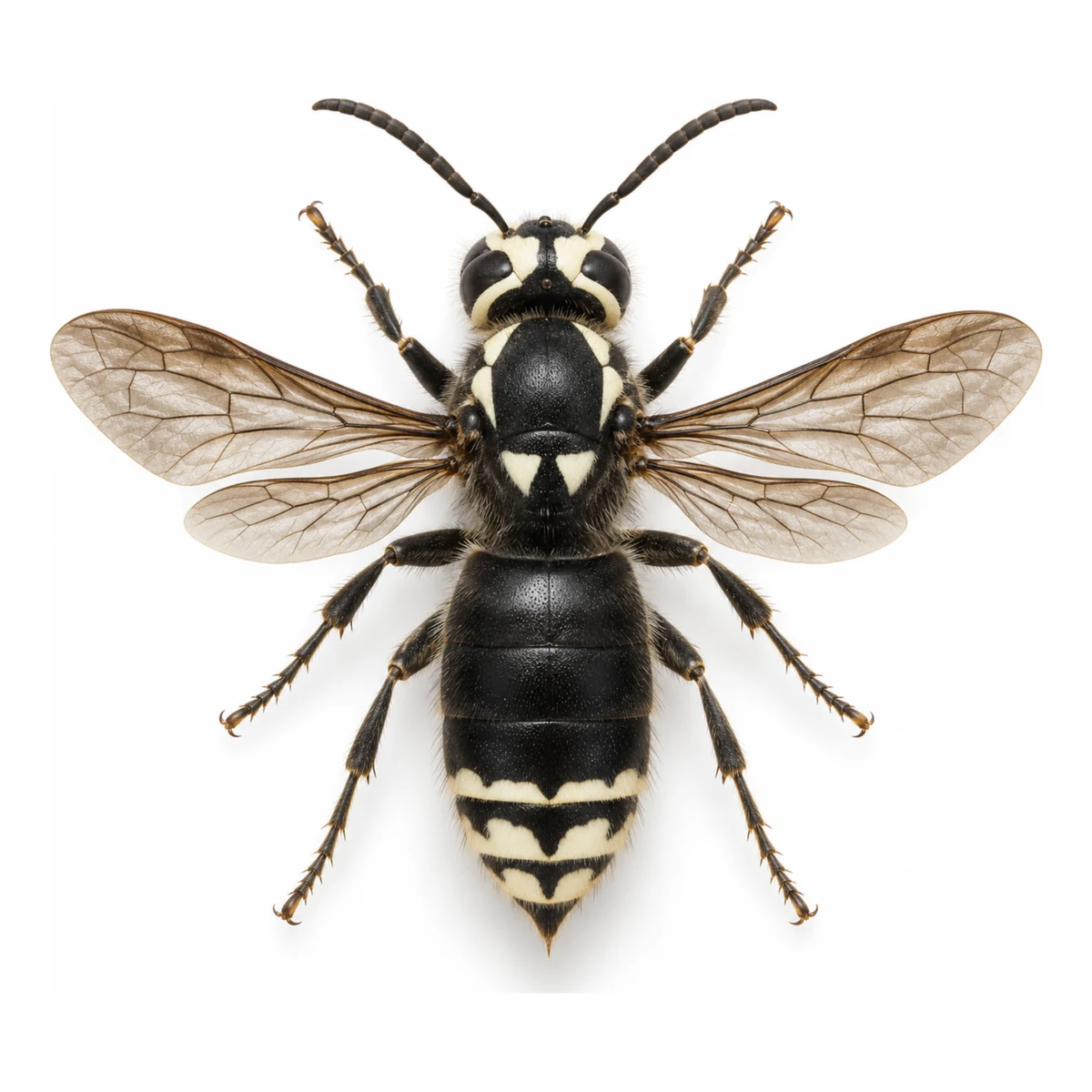
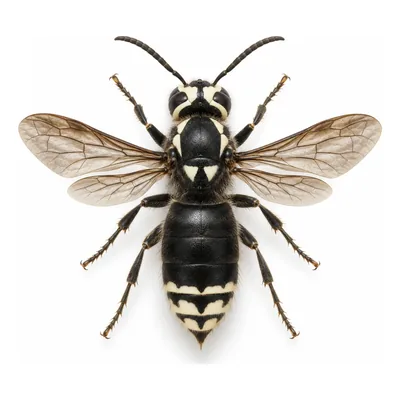
A black wasp with ivory-white markings on the face, thorax and tip of the abdomen. It's actually a kind of yellowjacket. Its football-shaped nest can grow bigger than a basketball by late summer.
Size: 5/8 to 3/4 inch
Where you'll find them: Large gray paper nests hanging from tree branches, shrubs, eaves and sheds
Why it matters: Very protective of the nest and can sting many times. Don't try to knock down a nest yourself.
Read the full Bald-Faced Hornet guide4. European Hornet
Vespa crabro
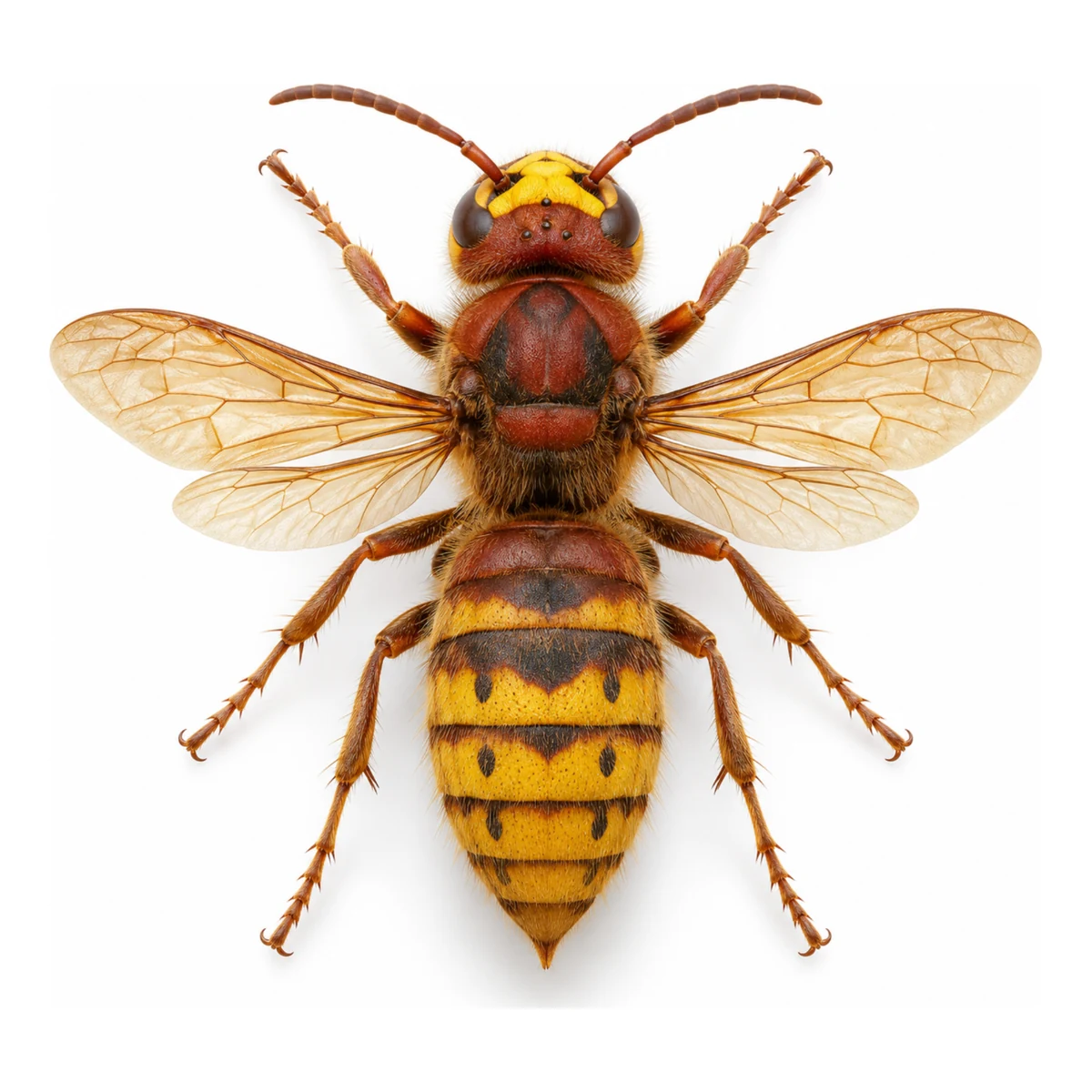
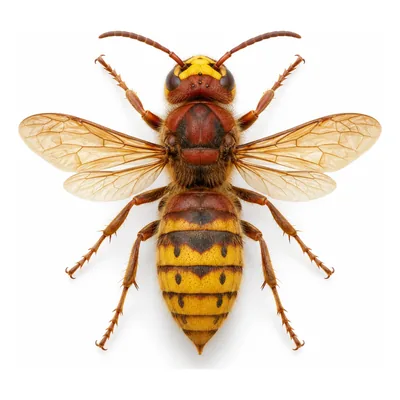
Our only true hornet, and much bigger than a yellowjacket. It has a reddish-brown head and thorax and a yellow abdomen with brown bands and teardrop spots. Unlike most wasps, it flies at night and often bumps against lit windows.
Size: 1 to 1 1/2 inches
Where you'll find them: Hollow trees, attics, barns and wall voids, and around porch lights at night
Why it matters: Less aggressive than yellowjackets away from the nest, but its sting is painful. It also strips bark from lilacs and other shrubs.
5. Mud Dauber
Sceliphron caementarium and others
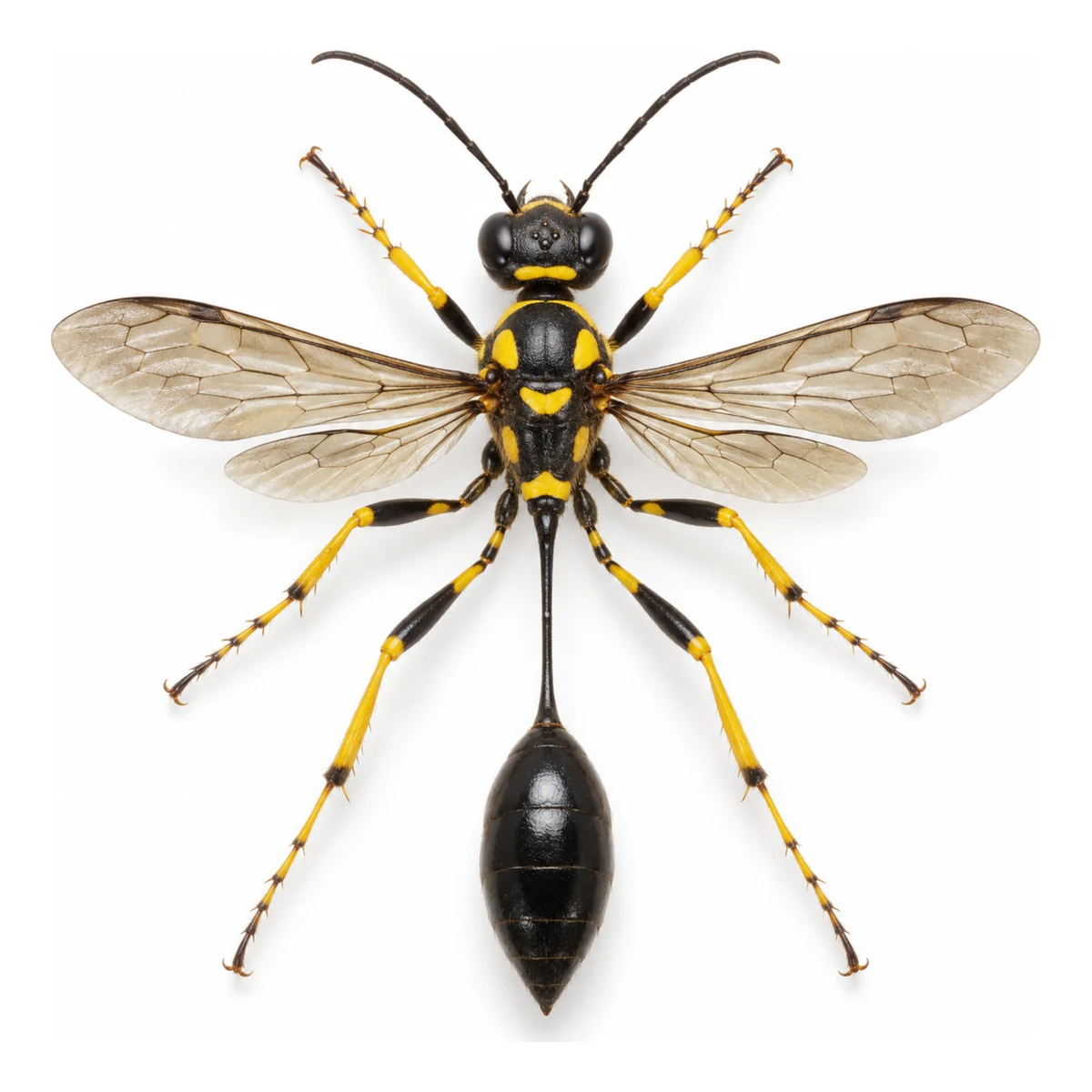
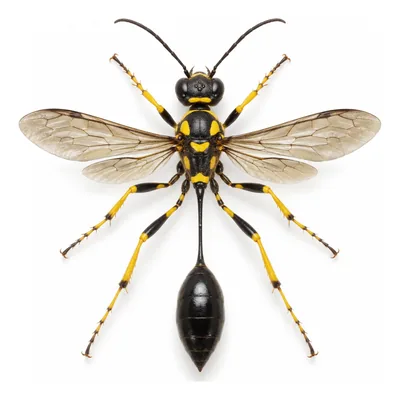
A long, slender wasp with a very thin, thread-like waist. Some are black and yellow, others are shiny metallic blue. Females build nests from mud and stock them with paralyzed spiders for their young.
Size: About 1 inch
Where you'll find them: Mud tubes and clumps under eaves, in garages, sheds, attics and on porch ceilings
Why it matters: Very docile and almost never sting. The mud nests are mostly a cleanup problem.
Read the full Mud Dauber guide6. Carpenter Bee
Xylocopa virginica
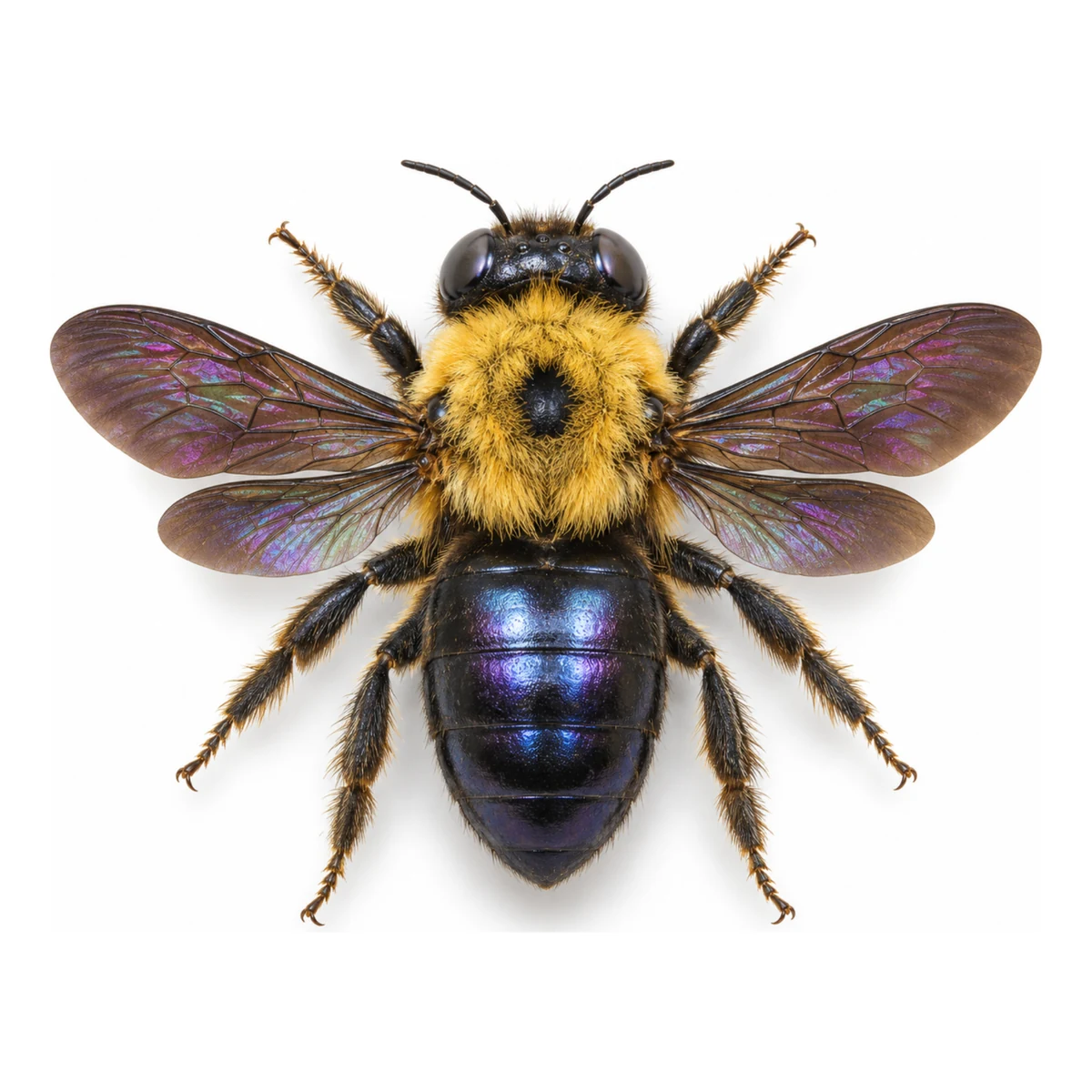
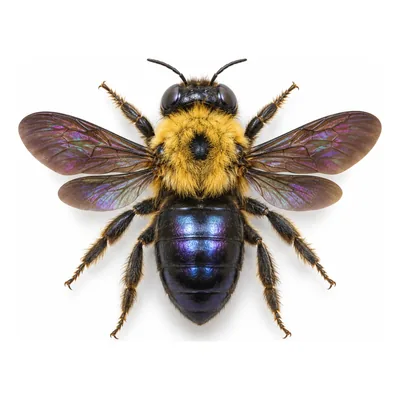
A big bee that looks like a bumble bee, but with a shiny, bare black abdomen. Males hover in front of people and dive-bomb them, but they can't sting. Females drill tunnels into bare or weathered wood to lay eggs.
Size: 3/4 to 1 inch
Where you'll find them: Perfectly round 1/2-inch holes in decks, fascia boards, eaves, fences and wooden siding
Why it matters: Rarely sting, but tunnels get longer every year and draw woodpeckers that tear the wood apart. Yellow staining below the holes is a sign.
Read the full Carpenter Bee guide7. Cicada Killer
Sphecius speciosus
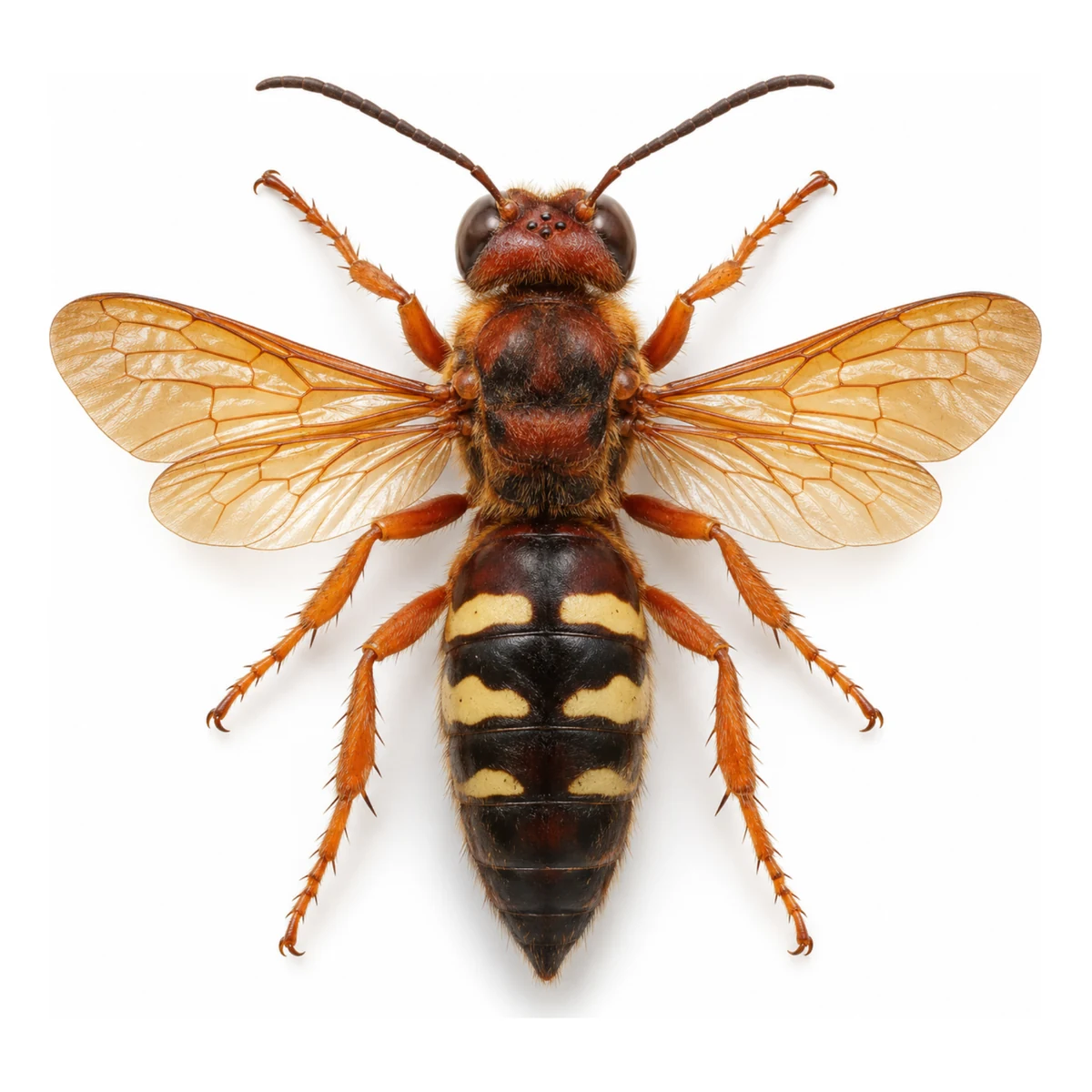
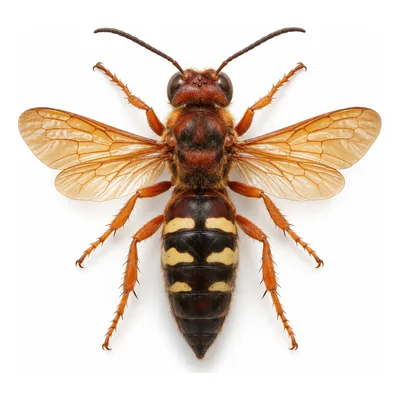
Our biggest wasp. It's black to rust-colored with pale yellow bands and amber wings. Females hunt cicadas, sting them and drag them back to their burrows.
Size: 1 1/2 to 2 inches
Where you'll find them: Burrows with a U-shaped pile of dirt in sunny lawns, flower beds and along sidewalks in July and August
Why it matters: Looks scary but is very docile. Males can't sting and females rarely do. The burrows can damage lawns.
Read the full Cicada Killer guide8. Honey Bee
Apis mellifera
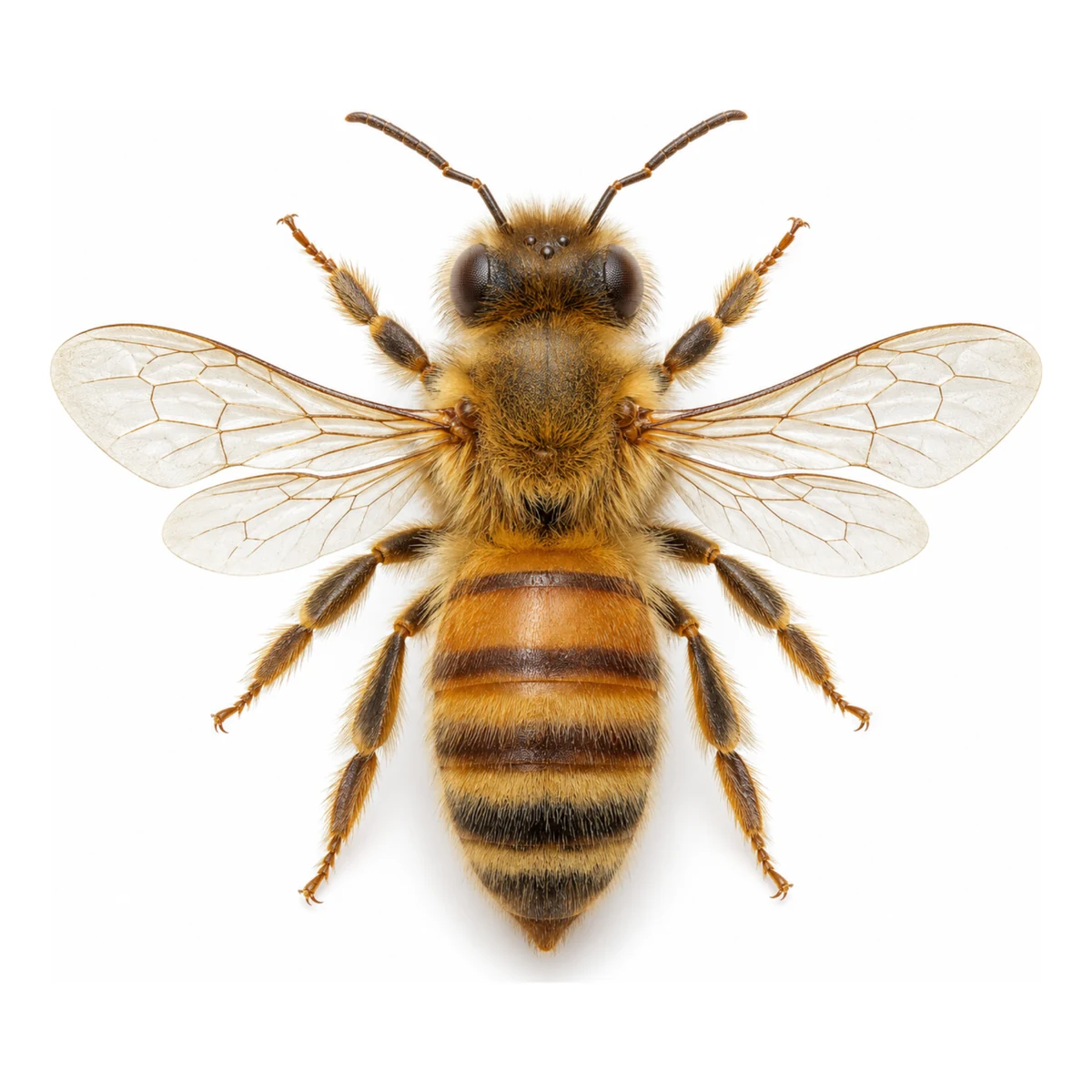
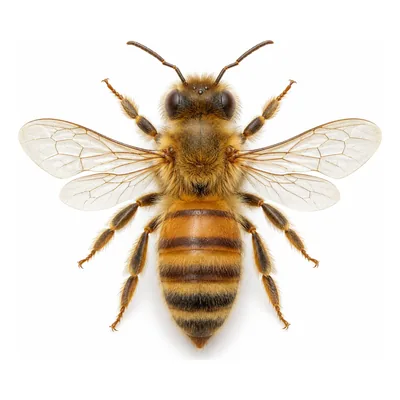
A golden-brown, fuzzy bee with darker bands on the abdomen. In spring, colonies may send out swarms that hang in a big cluster on a branch for a day or two while they look for a new home.
Size: About 1/2 inch
Where you'll find them: Flowers and gardens, and swarms that settle on branches or move into wall voids and chimneys
Why it matters: Important pollinators. A swarm on a branch usually moves on by itself. A colony living inside a wall needs a beekeeper to remove it, along with the comb, so the honey doesn't leak and attract other pests.
Life Cycle of Stinging Insects
- 1
Egg
In spring a queen that survived the winter starts a new nest and lays eggs in paper, mud or wax cells.
- 2
Larva
Legless, grub-like larvae hatch and are fed chewed-up insects or pollen and nectar, depending on the kind.
- 3
Pupa
Each larva spins a silk cap over its cell and changes into an adult inside. This takes about one to two weeks.
- 4
Adult
Workers take over building and feeding. In fall, new queens and males mate. Most wasp colonies die out at the first frost and only the new queens survive the winter.
Mistaken Identity: Stinging Insect Look-Alikes
Hover Flies
Yellow-and-black flies that hover over flowers. They have only two wings, big eyes and short antennae, and they can't sting.
Bumble Bees
Look like carpenter bees, but the abdomen is fuzzy and yellow instead of bare and shiny. They nest in the ground, not in wood.
Velvet Ants
Fuzzy red-and-black insects that crawl on the ground. They're actually wingless female wasps and have a very painful sting.
Clearwing Moths
Day-flying moths with clear wings and wasp-like colors. They have no stinger and a much thicker body.
Signs of a Stinging Insect Problem
- Wasps flying in and out of the same spot under eaves, in a wall or in the ground
- Gray paper combs or football-shaped nests on the house, shed or in trees
- Small holes in the lawn with insects coming and going
- Round, 1/2-inch holes in wood with sawdust or yellow stains below them
- Mud tubes on walls, ceilings and in sheds or garages
- A buzzing or chewing sound inside a wall, sometimes with wasps coming inside through light fixtures
How to Keep Stinging Insects Out
- Check eaves, porch ceilings, play sets and grills for small nests in spring, when they're easiest to deal with.
- Keep trash cans and recycling bins tightly closed and rinse out soda cans.
- Cover drinks and food outside in late summer, when yellowjackets go after sweets.
- Seal gaps in siding, soffits, vents and around utility lines so wasps can't nest in walls.
- Paint or stain bare wood to keep carpenter bees from drilling into it.
- Fill old rodent burrows and holes in the lawn that yellowjackets may use for nests.
How We Get Rid of Stinging Insects
We identify the insect and find every nest first. Some kinds, like honey bees, mud daubers and cicada killers, may not need treatment at all.
For yellowjackets, paper wasps and hornets, our technicians wear protective gear and treat the nest directly, including nests hidden in walls and the ground. Nests are removed once the colony is gone so new queens don't reuse the spot.
For carpenter bees we treat the tunnels and then seal them. Seasonal service around eaves, decks and play sets keeps new nests from getting started.