
Cockroaches: Identification, Pictures and Treatment
How to tell which roach you're seeing in your Bowling Green home, and what it means

What Do Cockroaches Look Like?
Types of Cockroaches in Bowling Green
These are the cockroaches we find in and around Bowling Green homes. Tap a picture to jump to it.
Cockroach Facts
- Order:
- Blattodea
- Size:
- 1/2 inch to 2 inches
- Legs:
- 6, covered in spines
- Wings:
- Most adults have wings, but few fly well
- Diet:
- Almost anything: crumbs, grease, paper, glue and soap
- Active:
- At night, hiding in cracks by day
- Life span:
- About 6 months to over a year
- Common in Bowling Green:
- 6 kinds
Have a cockroach problem that needs fixing?
Table of Contents
- What do cockroaches look like?
- Types of cockroaches in Bowling Green
- How to identify cockroaches
- Health risks
- 1. German Cockroach
- 2. American Cockroach
- 3. Oriental Cockroach
- 4. Smoky Brown Cockroach
- 5. Brown-Banded Cockroach
- 6. Wood Cockroach
- Life cycle of cockroaches
- Cockroach look-alikes
- Signs of a cockroach problem
- How to keep cockroaches out
- How we get rid of cockroaches
Seeing a cockroach in the house is upsetting, but the kind of roach tells you a lot. A German cockroach in the kitchen almost always means an indoor infestation that's growing. A big American or smoky brown roach that wandered in from outside is a very different problem.
Kentucky's warm, humid summers suit roaches well, and Bowling Green homes, apartments and restaurants see all of the kinds below. This page shows how to tell them apart and what each one means for your home.
How to Identify Cockroaches
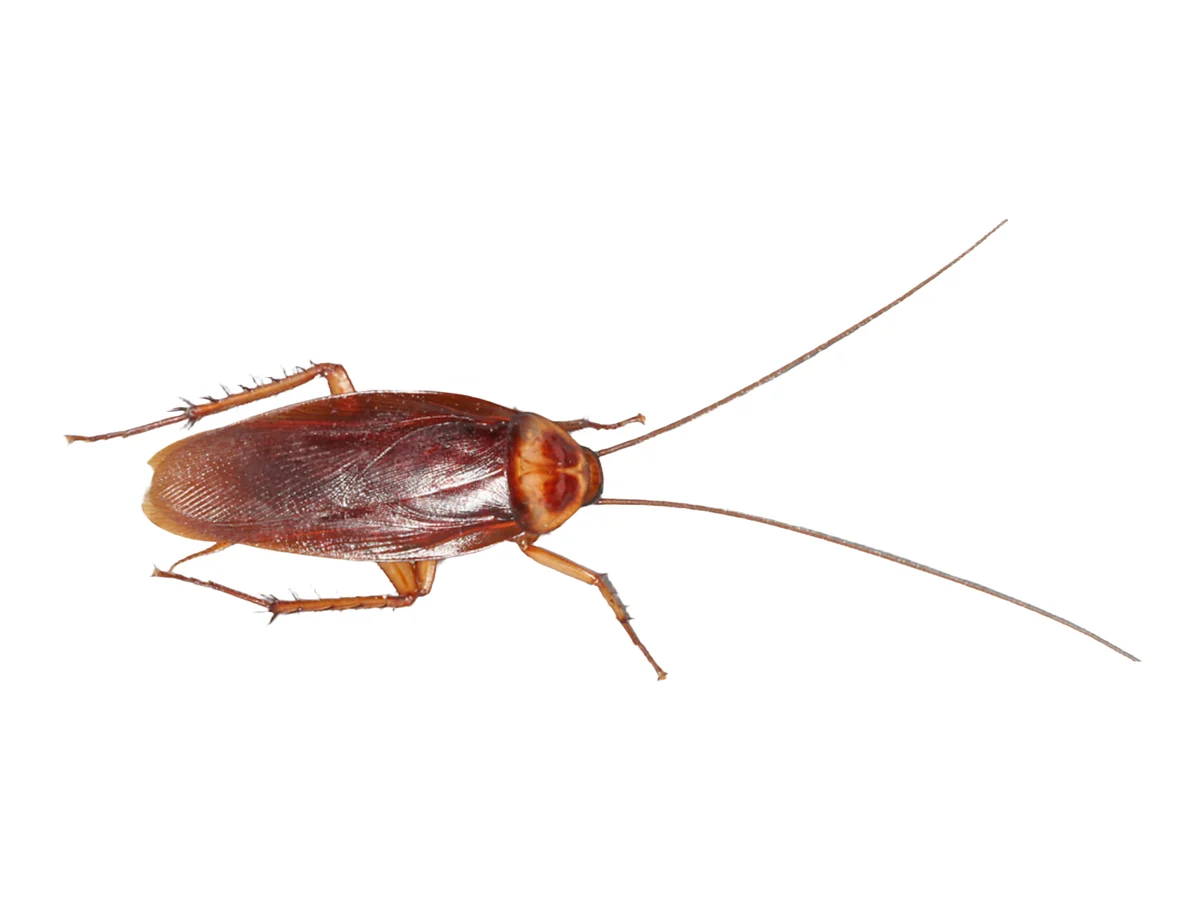
Cockroaches have flat, oval bodies built for squeezing into cracks as thin as a coin. A shield-like plate called the pronotum covers the head, so from above you often can't see the head at all. Long, thread-like antennae are often as long as the body.
Most adults have two pairs of wings folded flat over the back. The front pair is leathery and the back pair is thin. Some, like the oriental cockroach, have short wings or almost none. At the tail end are two short feelers called cerci, which sense air movement and help roaches dodge a shoe.
Young roaches, called nymphs, look like small, wingless adults. They're often darker, and German cockroach nymphs have a light stripe down the middle of the back.
Are Cockroaches Dangerous?
Cockroaches don't bite or sting, but they are one of the more serious household pests for health. They crawl through drains, garbage and sewers, then walk across counters, dishes and food.
Asthma and allergies
Roach droppings, saliva and shed skins are one of the biggest indoor asthma triggers, especially for children. The allergens stay in dust even after the roaches are gone.
Food poisoning
Roaches can carry Salmonella and E. coli on their legs and bodies and spread them to food and surfaces.
Other germs
They've been linked to spreading bacteria that cause dysentery, gastroenteritis and other stomach illnesses.
Contamination
A heavy infestation leaves droppings, egg cases, smear marks and a musty, oily smell that soaks into cabinets and stored food.
A Closer Look at Each Type
1. German Cockroach
Blattella germanica
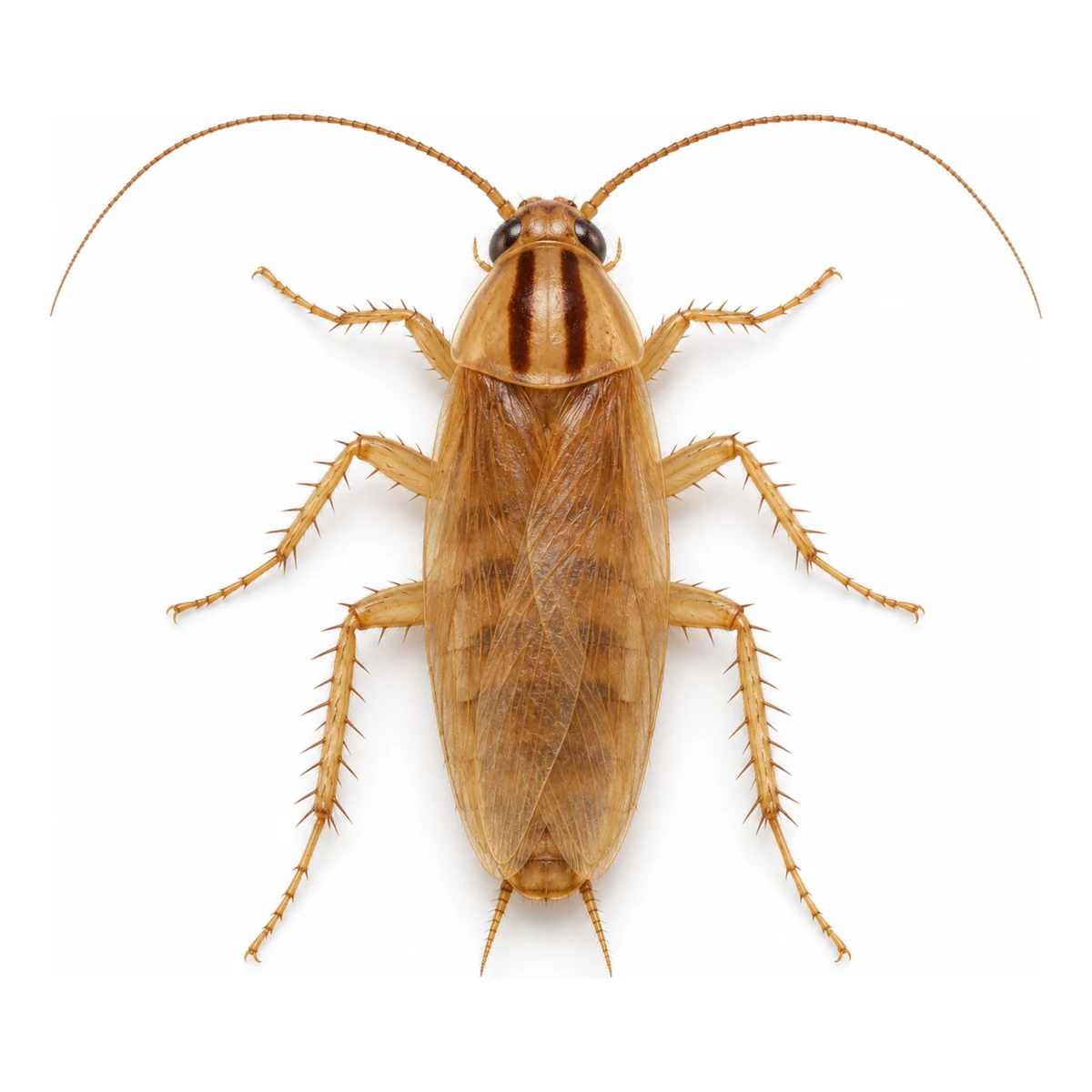
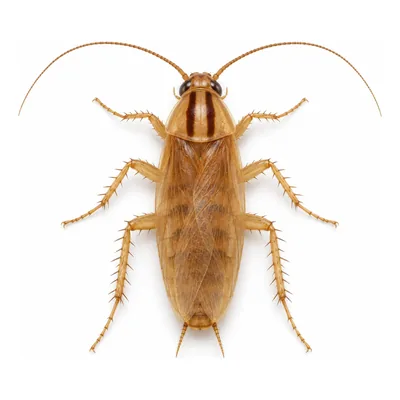
A small, light brown to tan roach with two dark stripes running down the shield behind the head. It has full wings but almost never flies. It lives entirely indoors and often comes in on grocery bags, cardboard boxes and used appliances.
Size: 1/2 to 5/8 inch
Where you'll find them: Kitchens and bathrooms: behind the fridge and stove, under the sink, in cabinet hinges, dishwashers and microwaves
Why it matters: The number one indoor roach in Bowling Green. One female can lead to thousands of roaches in a few months, so it needs professional treatment.
Read the full German Cockroach guide2. American Cockroach
Periplaneta americana
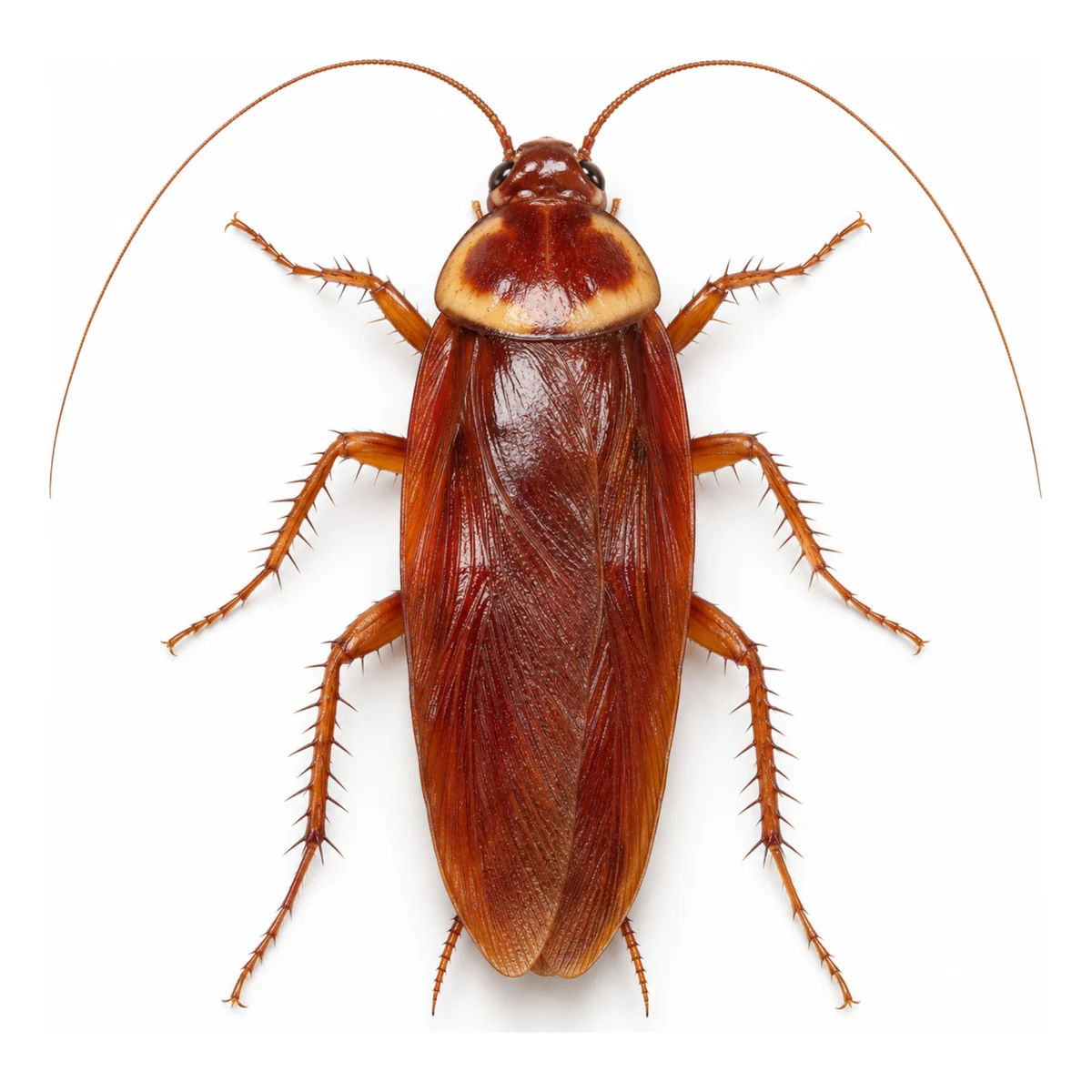
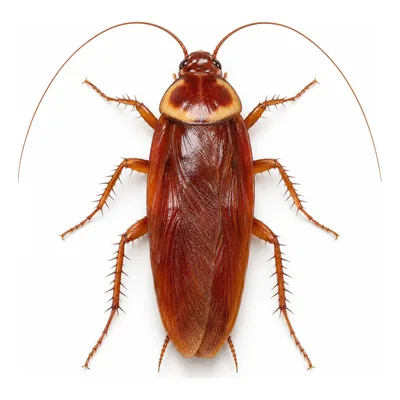
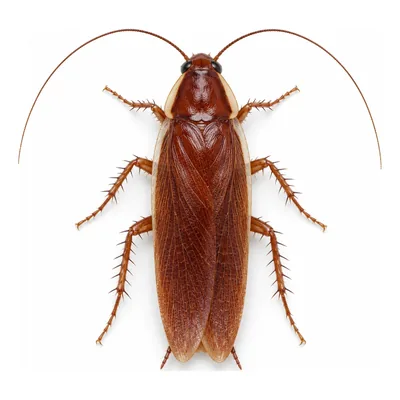
Our largest roach. It's reddish-brown with a pale, yellowish band around the edge of the shield behind the head. Adults have long wings and can glide short distances. People often call them water bugs or palmetto bugs.
Size: 1 1/2 to 2 inches
Where you'll find them: Basements, crawl spaces, floor drains, sewers and boiler rooms, and commercial kitchens
Why it matters: Usually comes up from drains, sewers and crawl spaces. A few may wander in, but steady sightings point to a moisture or plumbing problem.
Read the full American Cockroach guide3. Oriental Cockroach
Blatta orientalis
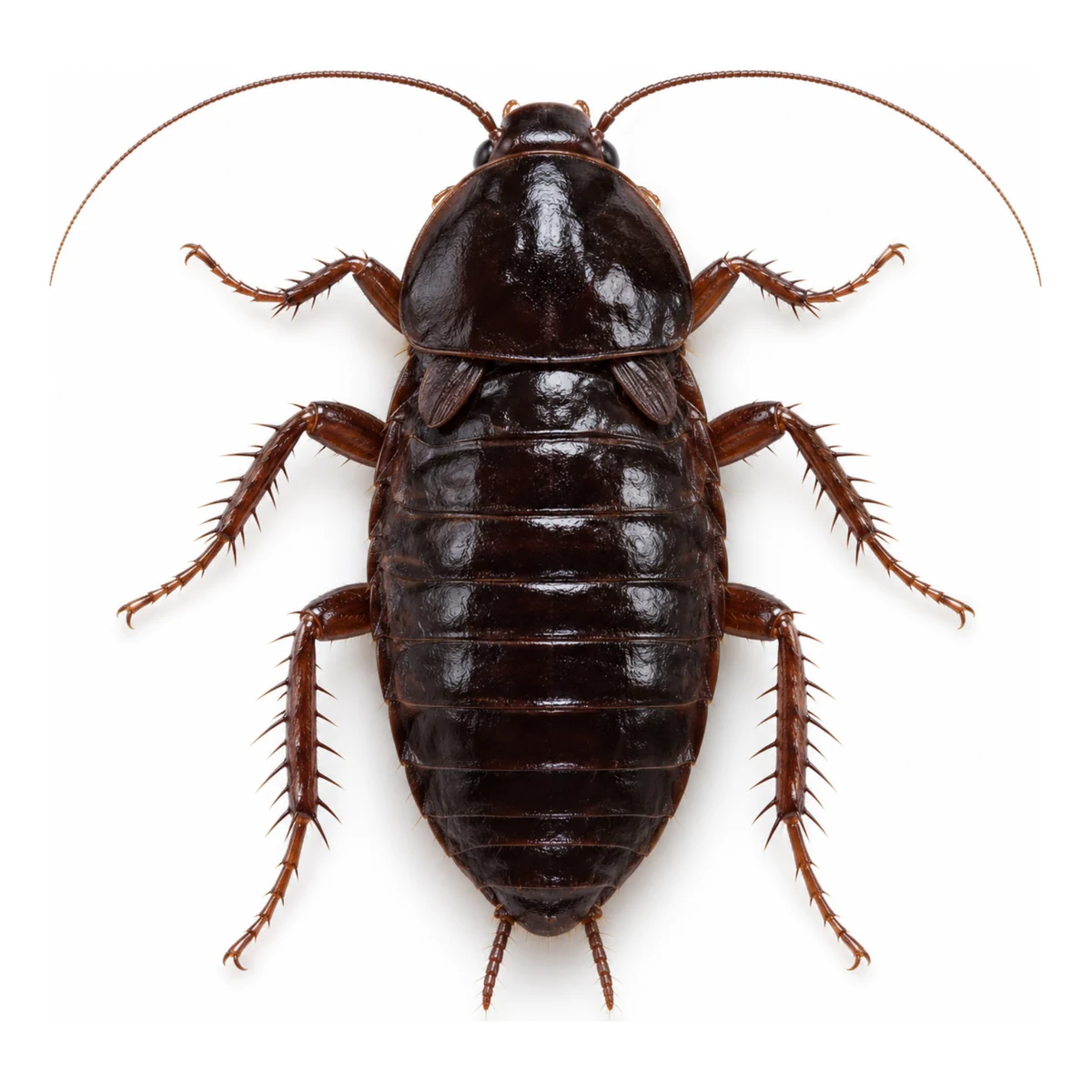
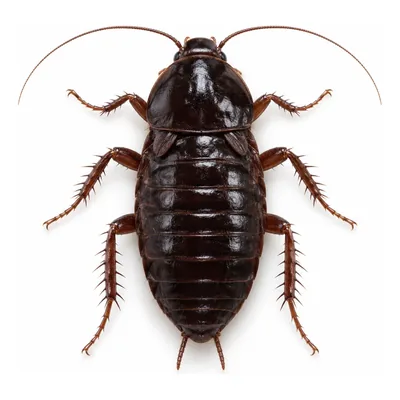
A shiny, very dark brown to black roach. Males have wings that cover about three-quarters of the body. Females have only tiny wing pads and look almost wingless. They're slow and can't climb smooth surfaces well, so they're often found on floors.
Size: About 1 inch
Where you'll find them: Damp, cool spots: basements, crawl spaces, floor drains, under porches and in mulch near the foundation
Why it matters: Gives off a strong, musty smell and likes the dampest, dirtiest spots, so it can carry a lot of germs. Often comes in from outdoors in spring.
Read the full Oriental Cockroach guide4. Smoky Brown Cockroach
Periplaneta fuliginosa
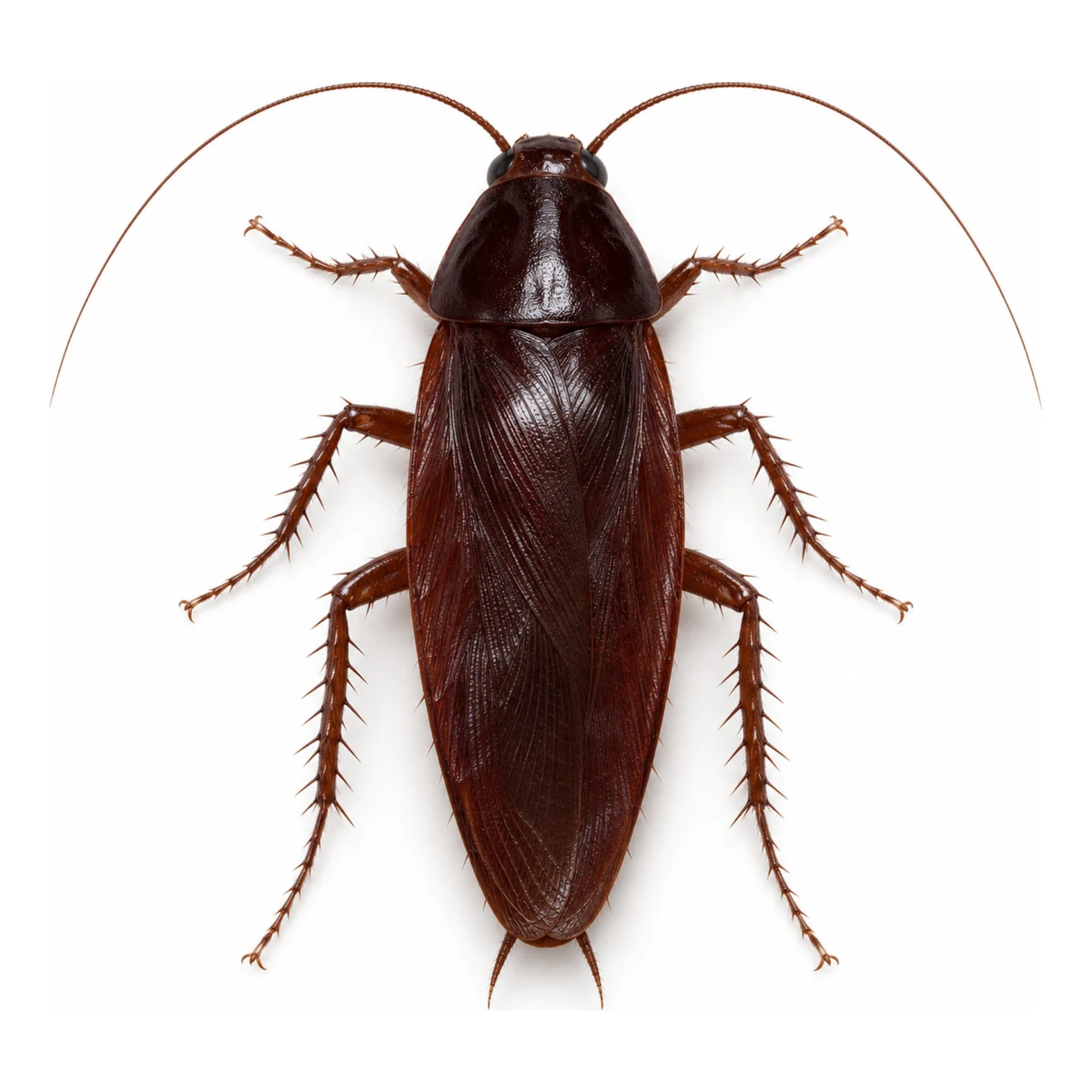
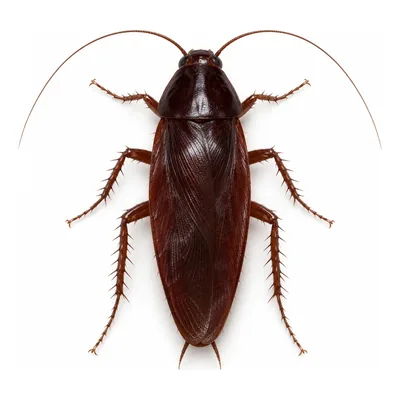
A large, uniformly dark brown to mahogany roach with no light markings. It's a strong flier and is drawn to lights at night. It lives mostly outdoors in warm, humid spots.
Size: 1 to 1 1/2 inches
Where you'll find them: Tree holes, gutters, woodpiles, mulch and attics, coming in around eaves, vents and windows
Why it matters: An outdoor roach that comes inside when it's hot and dry or when attics and gutters are close to trees. Sealing and an outside barrier usually stop them.
Read the full Smoky Brown Cockroach guide5. Brown-Banded Cockroach
Supella longipalpa
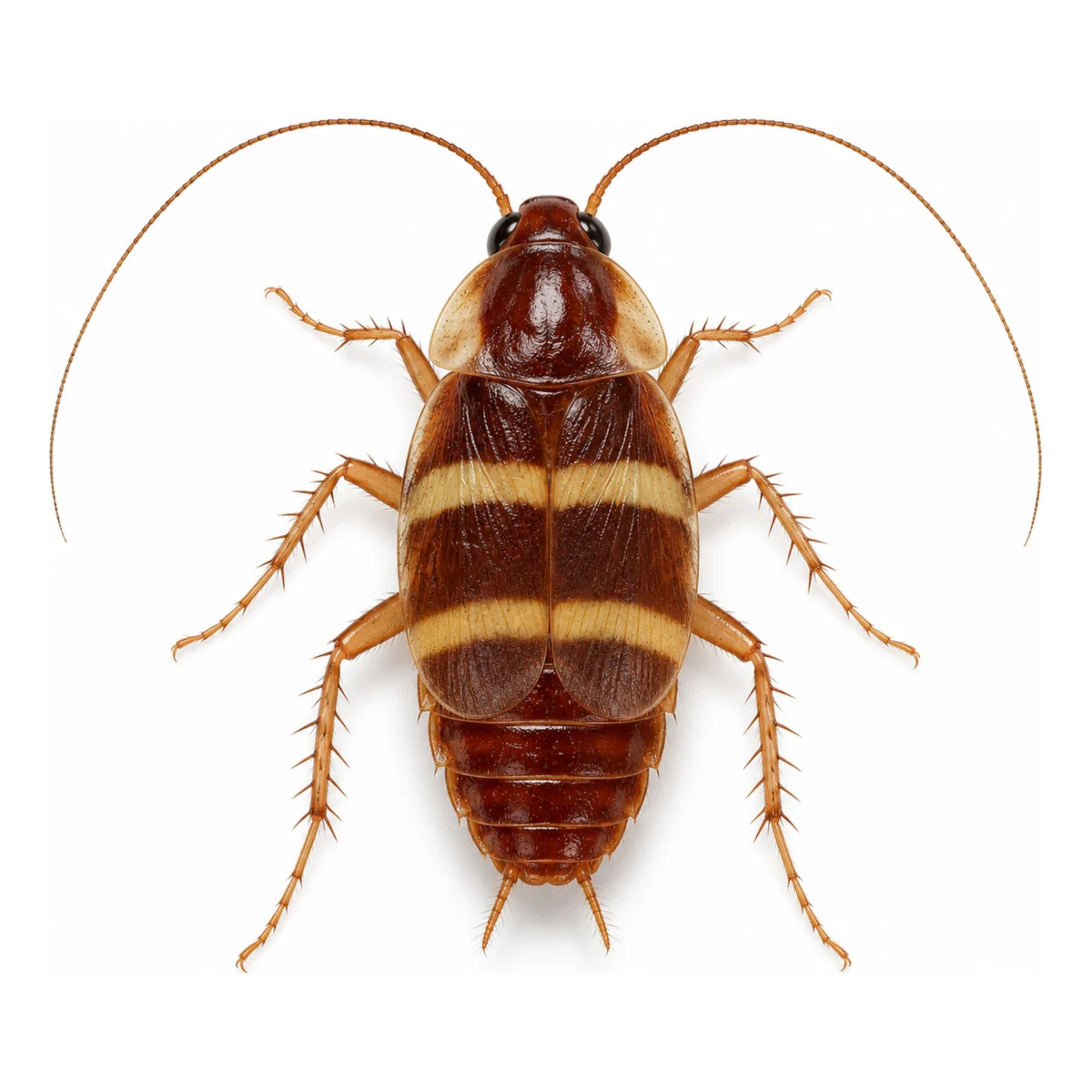
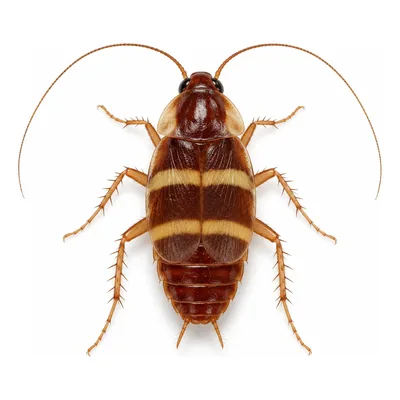
A small roach about the size of a German cockroach, but with two light, tan bands across the wings and body instead of stripes on the shield. Unlike German roaches, they don't need to be near water, so they turn up in bedrooms and living rooms.
Size: About 1/2 inch
Where you'll find them: Warm, dry spots high up in the house: behind picture frames, inside electronics, closets and furniture, all through the home
Why it matters: Harder to find because they spread all through the house. Egg cases glued under furniture and inside electronics are a common sign.
6. Wood Cockroach
Parcoblatta pennsylvanica
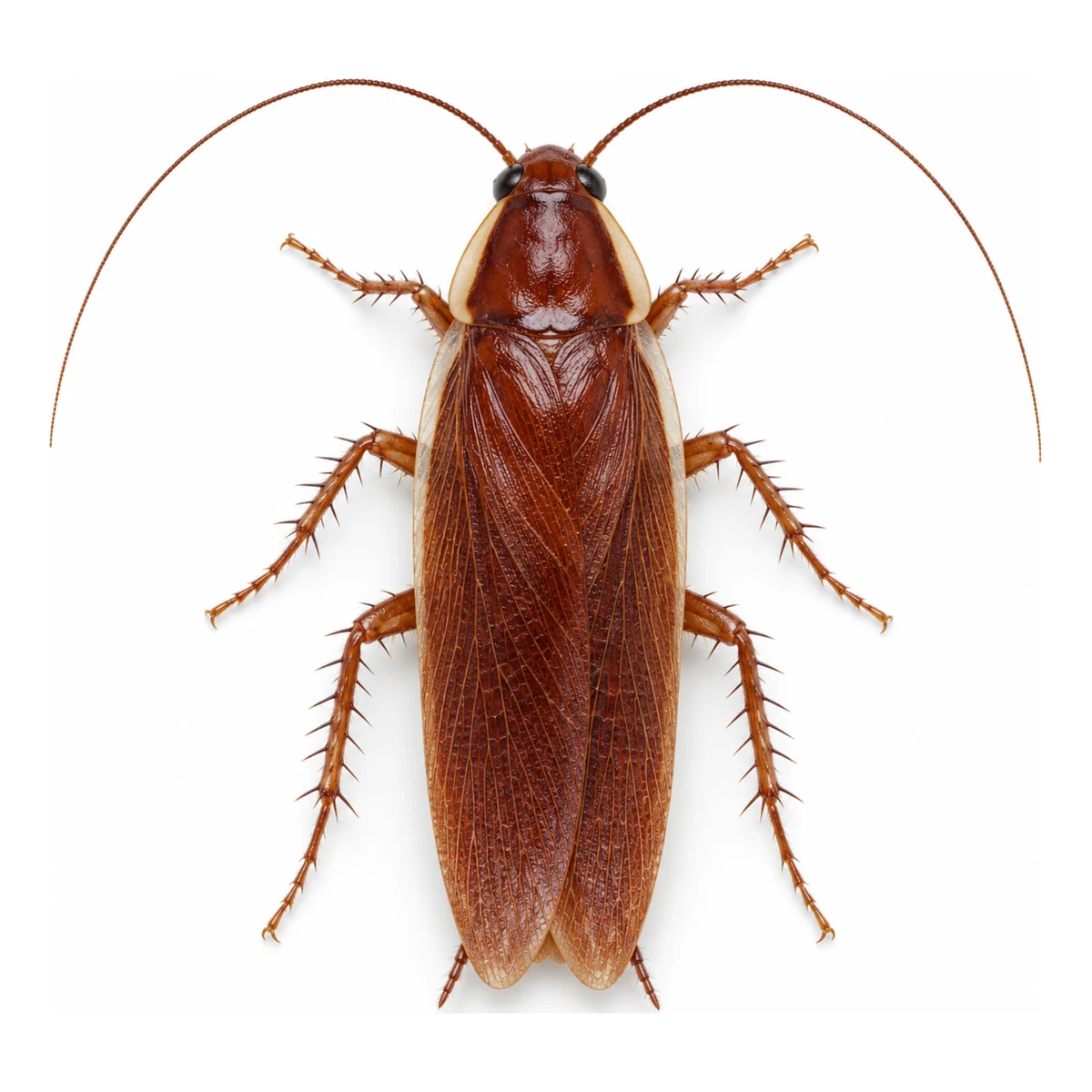
A chestnut-brown roach with pale, cream-colored edges on the shield and the front of the wings. Males fly well and are drawn to porch lights. Females have short wings. Firewood brought inside often carries them in.
Size: 3/4 to 1 inch
Where you'll find them: Under bark, in woodpiles, leaf litter and rotting logs, wandering inside in late spring and summer
Why it matters: An outdoor roach that can't survive long inside. It won't infest the house, so one or two in early summer is no reason to worry.
Life Cycle of Cockroaches
- 1
Egg case
Females lay eggs inside a hard, purse-shaped case called an ootheca. Depending on the kind, each holds about 14 to 40 eggs.
- 2
Nymph
Wingless nymphs hatch and shed their skin 6 to 13 times as they grow. German roach nymphs can be adults in about 2 months.
- 3
Adult
Adults have full or partial wings and can live from several months to over a year, laying new egg cases the whole time.
Mistaken Identity: Cockroach Look-Alikes
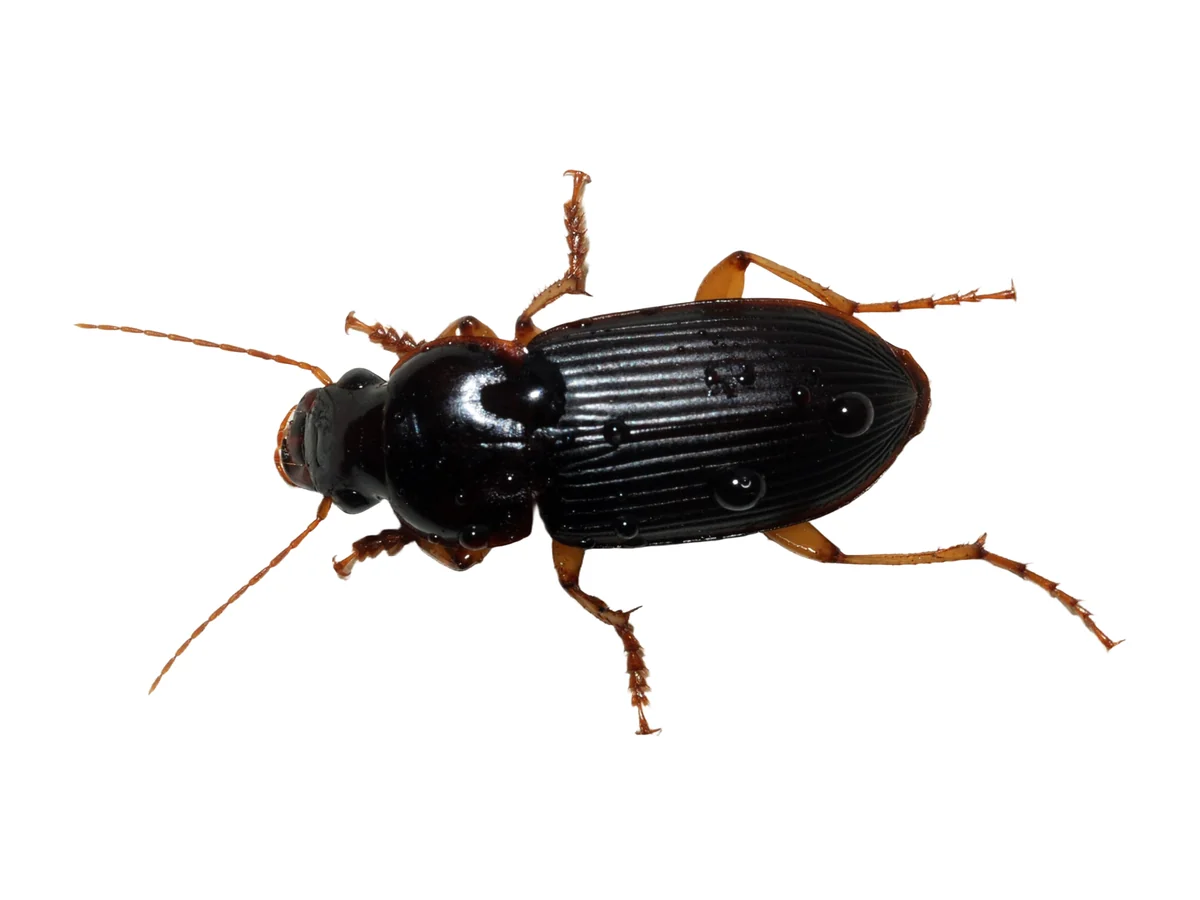
Ground Beetles
Dark, fast and found on floors, but beetles have a hard shell with a straight seam down the back and short antennae.
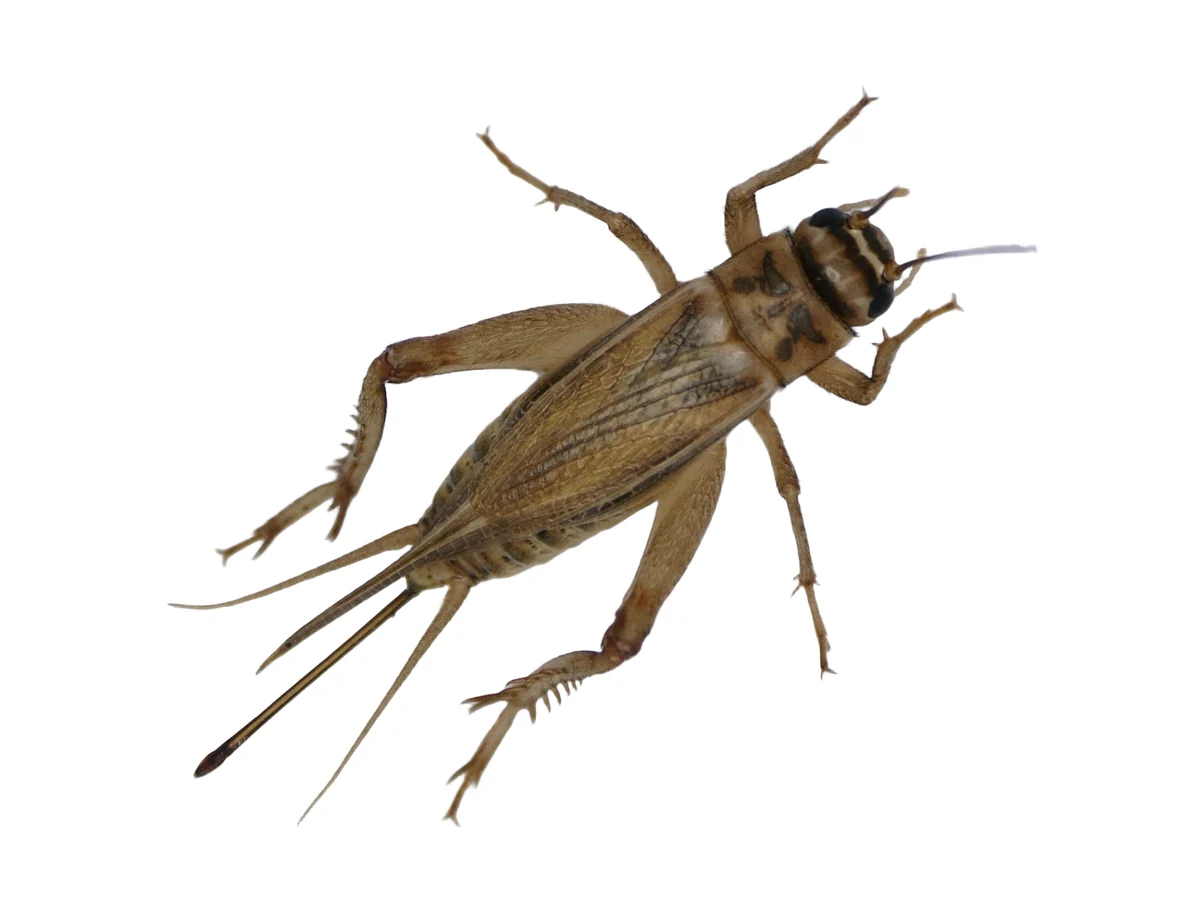
Crickets
Brown and nocturnal, but crickets have big jumping back legs and chirp.
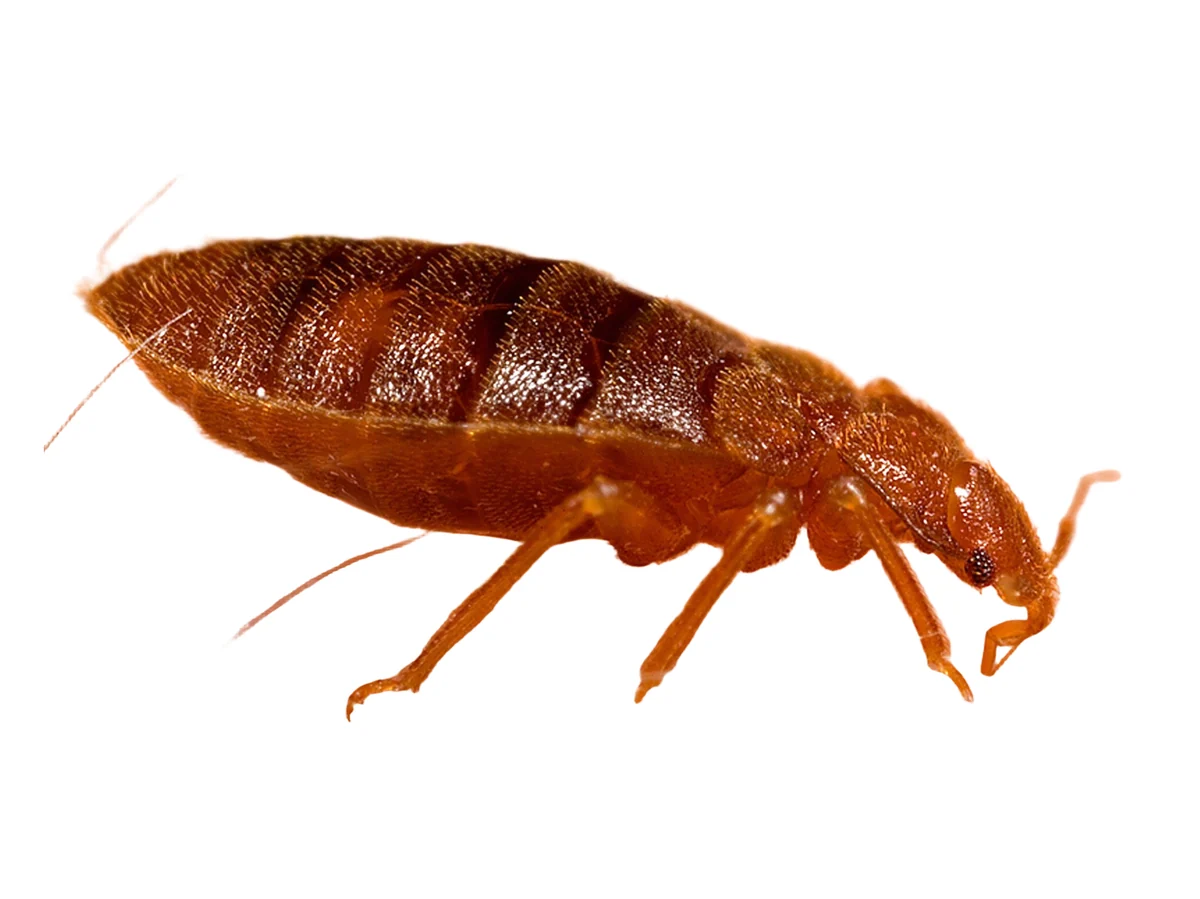
Bed Bugs
Small, flat and reddish-brown like a young roach, but rounder, slower, with short antennae and found around beds.
Giant Water Bugs
Large flat insects found near ponds and drawn to lights. They have grasping front legs and can bite. People often call big roaches 'water bugs' too.
Signs of a Cockroach Problem
- Roaches running for cover when you turn on the kitchen or bathroom light at night
- Small black droppings like ground pepper or coffee grounds in drawers, cabinets and on counters
- Brown, purse-shaped egg cases in cracks, behind furniture or under shelves
- Dark smear marks along walls and the edges of cabinets
- A musty, oily smell that gets stronger as the infestation grows
- Shed skins in cabinets, under appliances or behind the fridge
How to Keep Cockroaches Out
- Clean up crumbs, grease and spills, and don't leave dirty dishes out overnight.
- Store food, including pet food, in sealed containers.
- Fix dripping faucets and leaky pipes, and keep the area under the sink dry.
- Take out trash often and use cans with tight lids.
- Check grocery bags, cardboard boxes and used appliances or furniture before bringing them in.
- Seal gaps around pipes, drains, vents and doors, and keep crawl spaces dry.
- Keep firewood, leaf litter and mulch away from the foundation.
How We Get Rid of Cockroaches
We start by identifying the roach, because an indoor German roach problem is treated very differently from big outdoor roaches wandering in.
For German and brown-banded roaches we use professional gel baits in cracks and hiding spots, plus growth regulators that stop nymphs from becoming breeding adults. Follow-up visits make sure the whole population is gone, not just the roaches you can see.
For American, oriental, smoky brown and wood roaches we treat the outside perimeter, crawl spaces, drains and entry points, and help seal the gaps they use to get in. Quarterly service keeps them from coming back.