
Ants: Identification, Pictures and Treatment
How to tell which ants are in your Bowling Green home, and why the right ID matters for getting rid of them
What Do Ants Look Like?
Types of Ants in Bowling Green
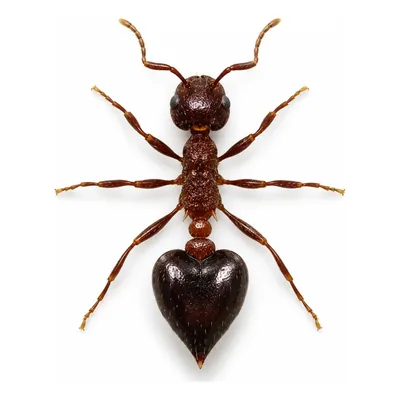
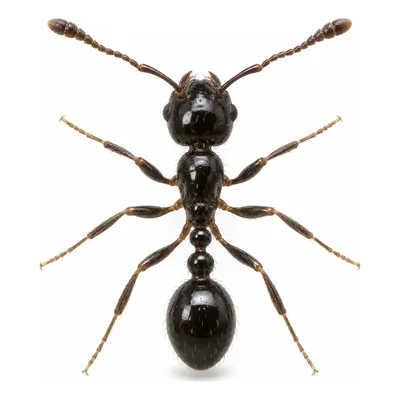
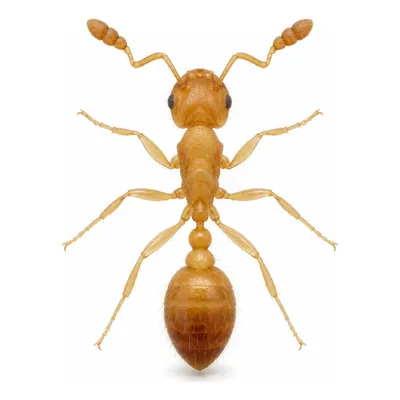
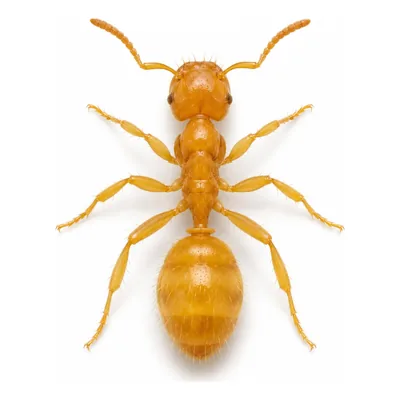
These are the ants we find most in and around Bowling Green homes. Tap a picture to jump to it.
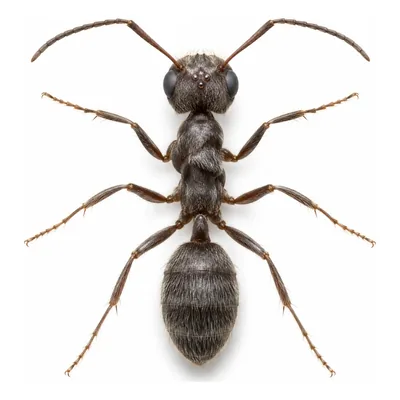
Ant Facts
- Family:
- Formicidae
- Size:
- 1/16 inch to 1/2 inch (workers)
- Legs:
- 6
- Wings:
- Only on swarmers (future kings and queens)
- Diet:
- Sweets, grease, protein and other insects, depending on the kind
- Colony size:
- A few hundred to hundreds of thousands
- Queen life span:
- Up to 10 years or more in some kinds
- Common in Bowling Green:
- 8 kinds
Have a ant problem that needs fixing?
Table of Contents
- What do ants look like?
- Types of ants in Bowling Green
- How to identify ants
- Carpenter ants vs. termites
- 1. Carpenter Ant
- 2. Odorous House Ant
- 3. Pavement Ant
- 4. Acrobat Ant
- 5. Little Black Ant
- 6. Pharaoh Ant
- 7. Citronella Ant
- 8. Field Ant
- Life cycle of ants
- Ant look-alikes
- Signs of a ant problem
- How to keep ants out
- How we get rid of ants
Ants are the most common pest call we get in Bowling Green from spring through fall. Most kinds are just a nuisance in the kitchen, but carpenter ants can damage wood, and a few others are hard to get rid of if they're treated the wrong way.
Each kind of ant eats different foods, nests in different places and reacts differently to treatments. Some, like pharaoh ants, split into more colonies when they're sprayed. That's why identifying the ant comes first. This page shows the ants we find most around Warren County.
How to Identify Ants
Ants have three clear body parts: head, thorax and abdomen (called the gaster), joined by a very narrow waist. That waist has one or two small bumps called nodes. Counting the nodes is one of the main ways pros tell ants apart.
Their antennae bend in the middle like an elbow, which sets them apart from termites, whose antennae are straight and beaded. The shape of the thorax matters too. Some ants have a smooth, evenly curved back, while others have a bumpy back or a pair of small spines.
Most of the ants you see are workers, which are wingless females. In spring, mature colonies send out winged swarmers to mate and start new nests, and those swarmers are often mistaken for termites.
Carpenter Ants vs. Termites
Every spring we get calls about flying insects coming out of a wall or window, and it's usually either carpenter ant or termite swarmers. They look similar at a glance, but the difference matters a lot. Here's how to tell them apart.
Waist
Ants have a narrow, pinched waist. Termites have a thick waist, so the body looks like one straight piece.
Antennae
Ant antennae are bent like an elbow. Termite antennae are straight and look like a string of tiny beads.
Wings
Ant swarmers have two pairs of wings, and the front pair is longer. Termite wings are all the same length, much longer than the body, and break off easily.
Damage
Carpenter ants carve smooth, clean tunnels and push out sawdust-like frass. Termites eat wood and leave tunnels packed with mud, and you'll often see mud tubes on the foundation.
A Closer Look at Each Type
1. Carpenter Ant
Camponotus pennsylvanicus
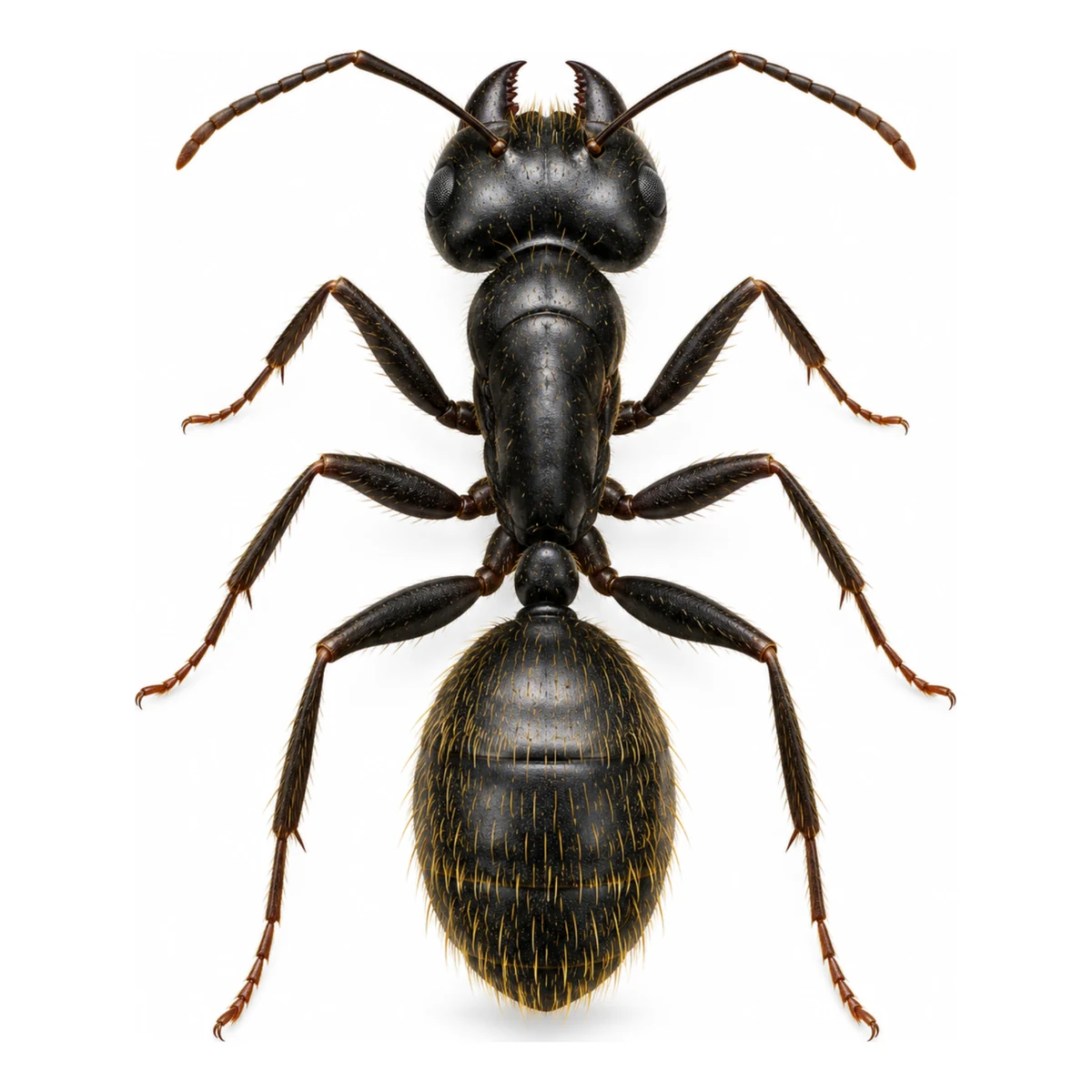
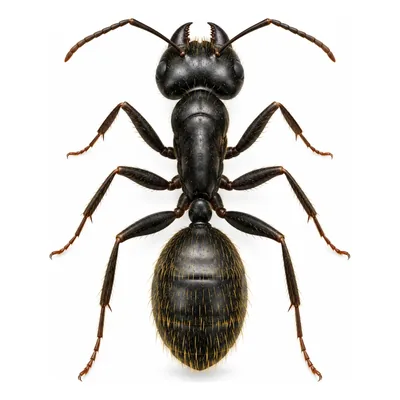
Our largest ant. It's mostly black with fine golden hairs on the abdomen, one node at the waist and a smooth, evenly rounded back. Workers are most active at night and travel in lines from an outdoor nest to food inside. Piles of coarse sawdust mixed with insect parts are a giveaway.
Size: 1/4 to 1/2 inch (workers come in several sizes)
Where you'll find them: Damp or rotting wood around windows, decks, roof leaks, porch columns and tree stumps, often with a satellite nest inside the house
Why it matters: They don't eat wood, but they hollow it out to nest, and a colony left alone for years can weaken trim, framing and decks. They usually point to a moisture problem.
Read the full Carpenter Ant guide2. Odorous House Ant
Tapinoma sessile
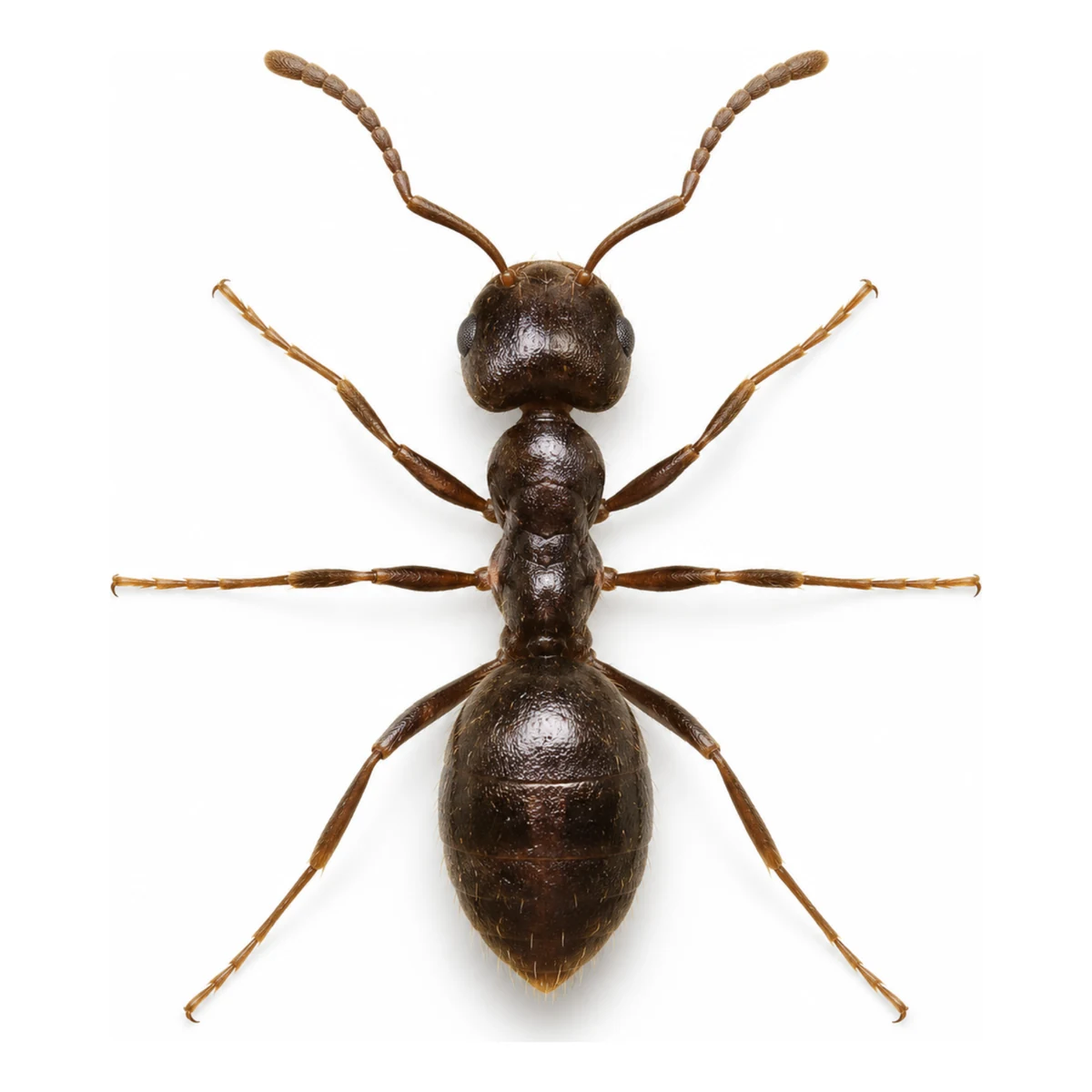
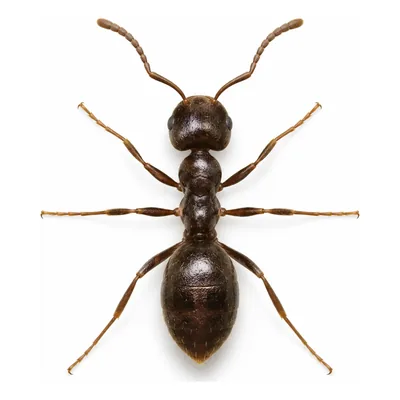
A small, dark brown to black ant with a single, flat node hidden under the abdomen, so the waist seems to have no bump at all. Crush one and it gives off a smell a lot like rotten coconut. They form long, busy trails and move fast and erratically.
Size: About 1/8 inch
Where you'll find them: Kitchens, bathrooms and along countertops, often coming in under siding, around windows or from mulch beds
Why it matters: The most common ant in Bowling Green kitchens. Colonies have many queens and split easily, so sprays often make them worse.
Read the full Odorous House Ant guide3. Pavement Ant
Tetramorium immigrans
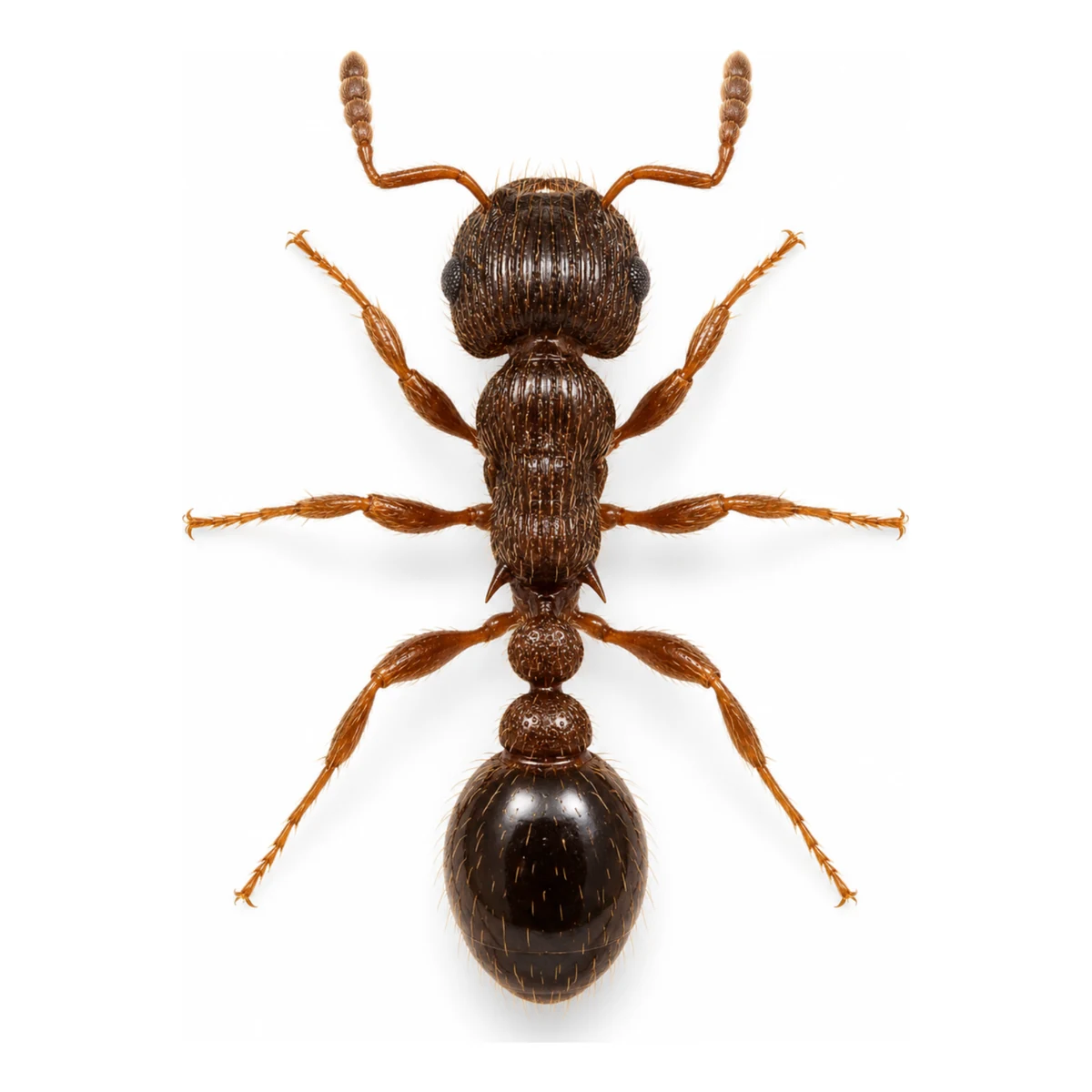
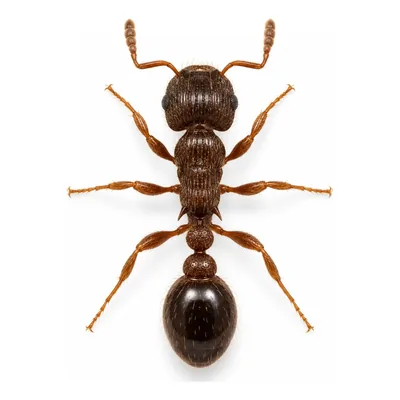
A small dark brown to black ant with two nodes at the waist, fine grooves on the head and back, and two tiny spines on the rear of the thorax. Little piles of sand along cracks in the pavement show where the nest is. In spring they sometimes fight in big swarms on the sidewalk.
Size: About 1/8 inch
Where you'll find them: Under sidewalks, driveways, patios and slab foundations, coming inside through cracks in the slab
Why it matters: Mainly a nuisance. They come in for grease, sweets and pet food, especially in homes built on a slab.
Read the full Pavement Ant guide4. Acrobat Ant
Crematogaster species
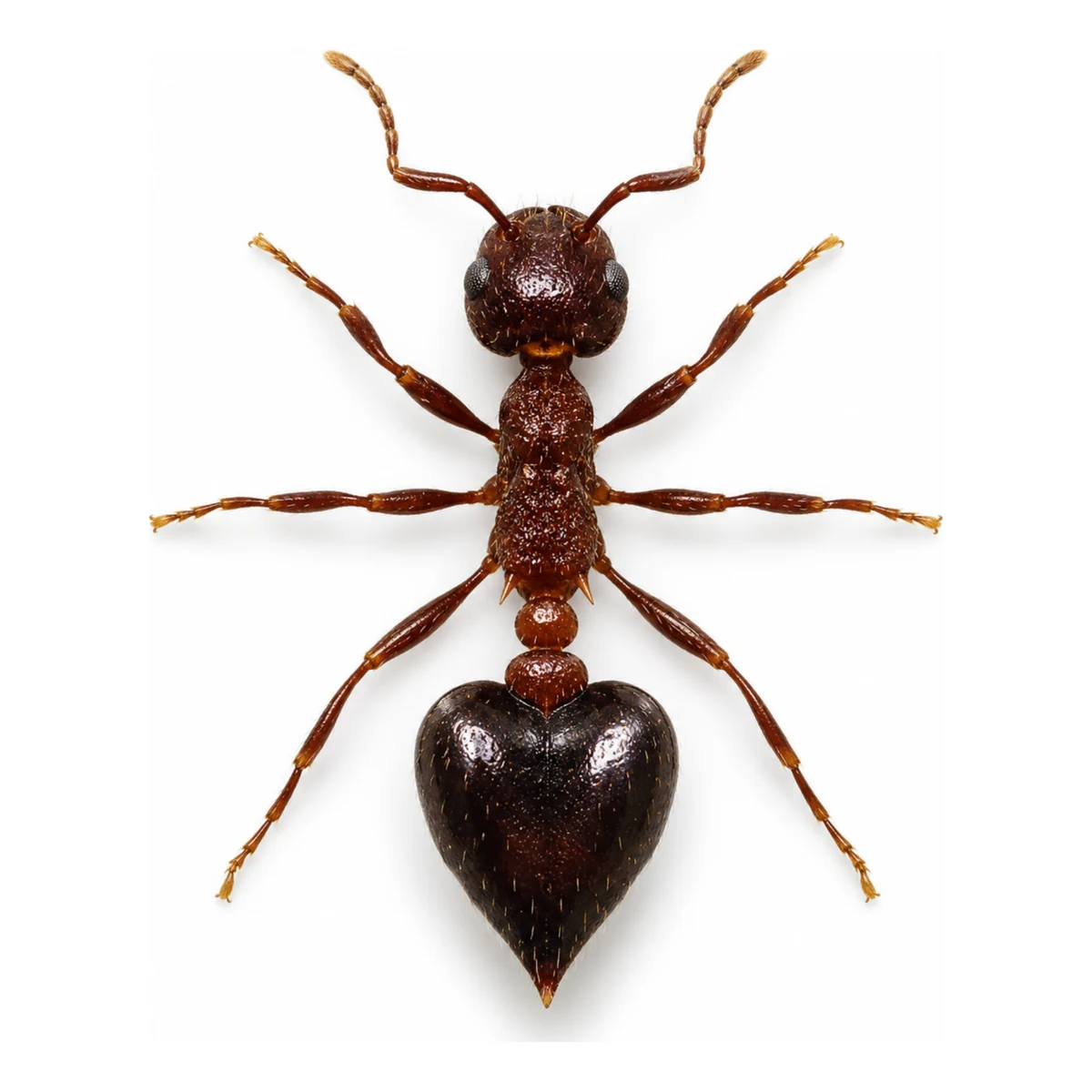
A small ant with a reddish-brown head and thorax and a dark, shiny, heart-shaped abdomen. When disturbed it raises the abdomen up over its head like an acrobat. It has two nodes and two small spines on the back.
Size: 1/16 to 1/8 inch
Where you'll find them: Wood damaged by moisture or other insects, foam insulation, wall voids and around windows and door frames
Why it matters: Can give a small bite and a bad smell when disturbed. Nests indoors usually mean there's moisture or old damage in the wood.
Read the full Acrobat Ant guide5. Little Black Ant
Monomorium minimum
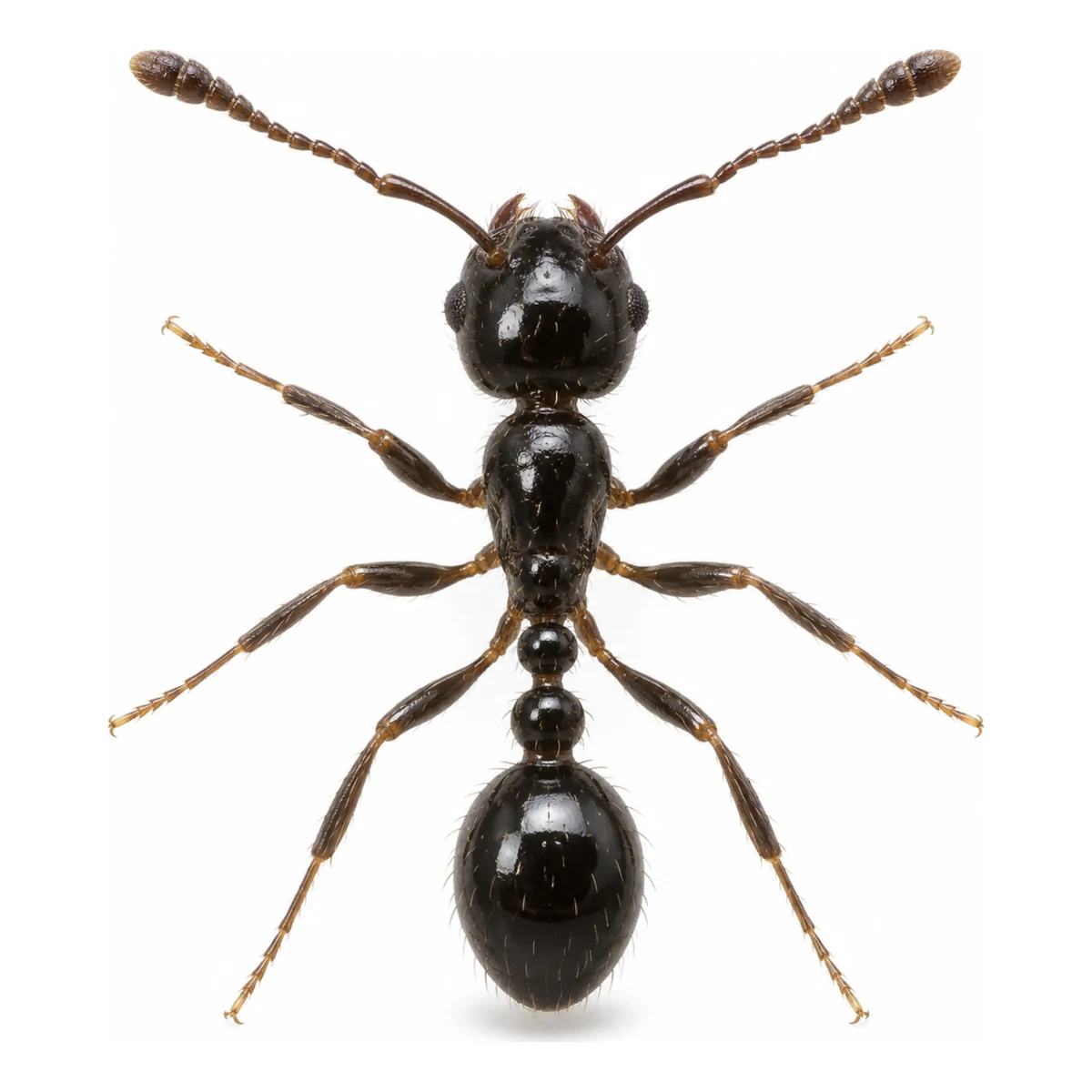
A tiny, shiny jet-black ant with two nodes and no spines. Workers form slow, narrow trails along baseboards and countertops. They're one of the smallest ants you'll see in a home.
Size: About 1/16 inch
Where you'll find them: Lawns, mulch, under rocks and in wall voids, coming in to kitchens and bathrooms
Why it matters: A nuisance in kitchens. Colonies have multiple queens, so baits work better than sprays.
6. Pharaoh Ant
Monomorium pharaonis
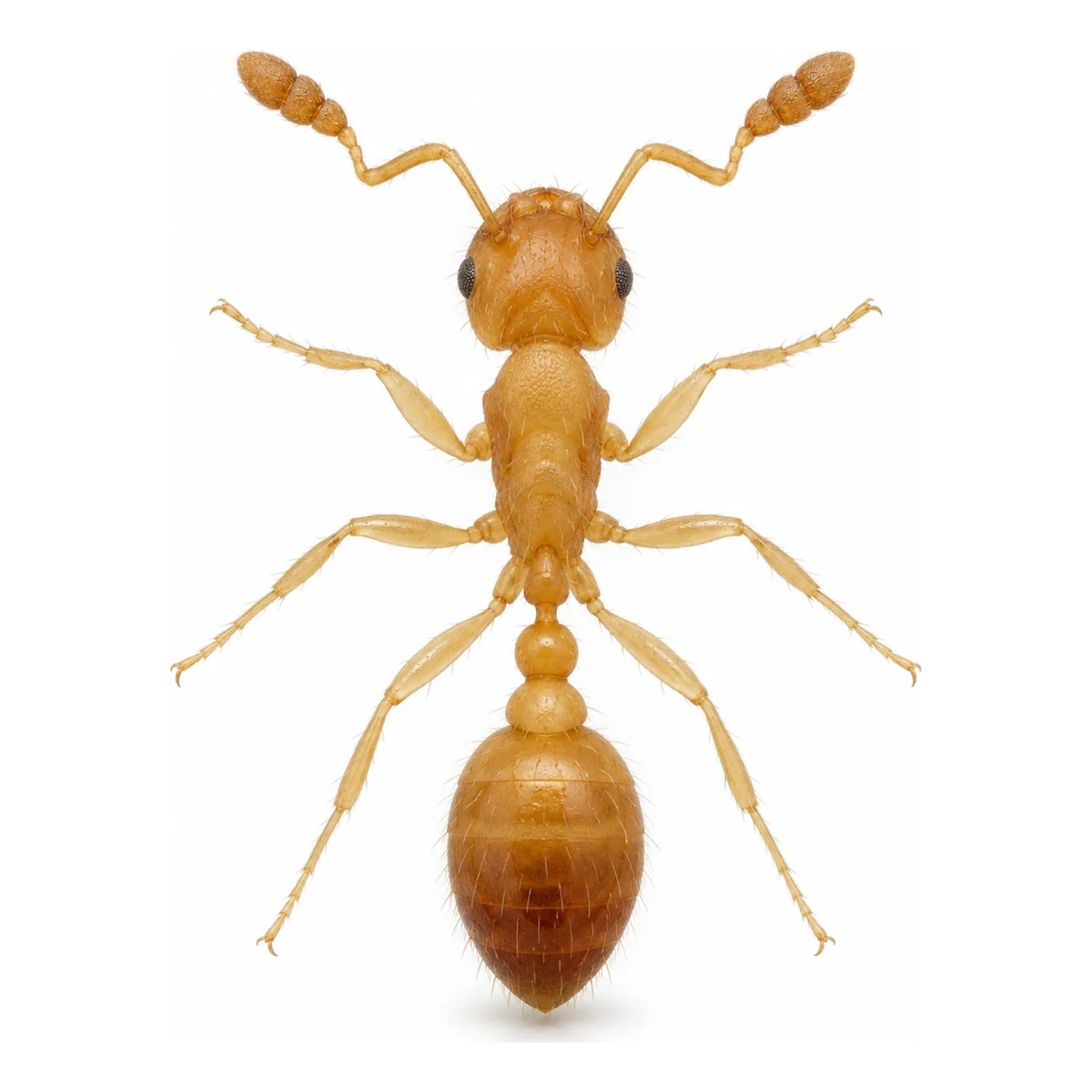
A tiny, pale yellow to light orange ant with a darker tip on the abdomen and two nodes. It nests almost entirely indoors, in wall voids and small hidden spaces, and forms huge colonies with hundreds of queens.
Size: About 1/16 inch
Where you'll find them: Warm, humid spots inside: kitchens, bathrooms, behind outlets and appliances, and in apartments, hospitals and nursing homes
Why it matters: One of the hardest ants to get rid of. Spraying makes the colony split into many new ones, so it needs a careful bait program.
7. Citronella Ant
Lasius species
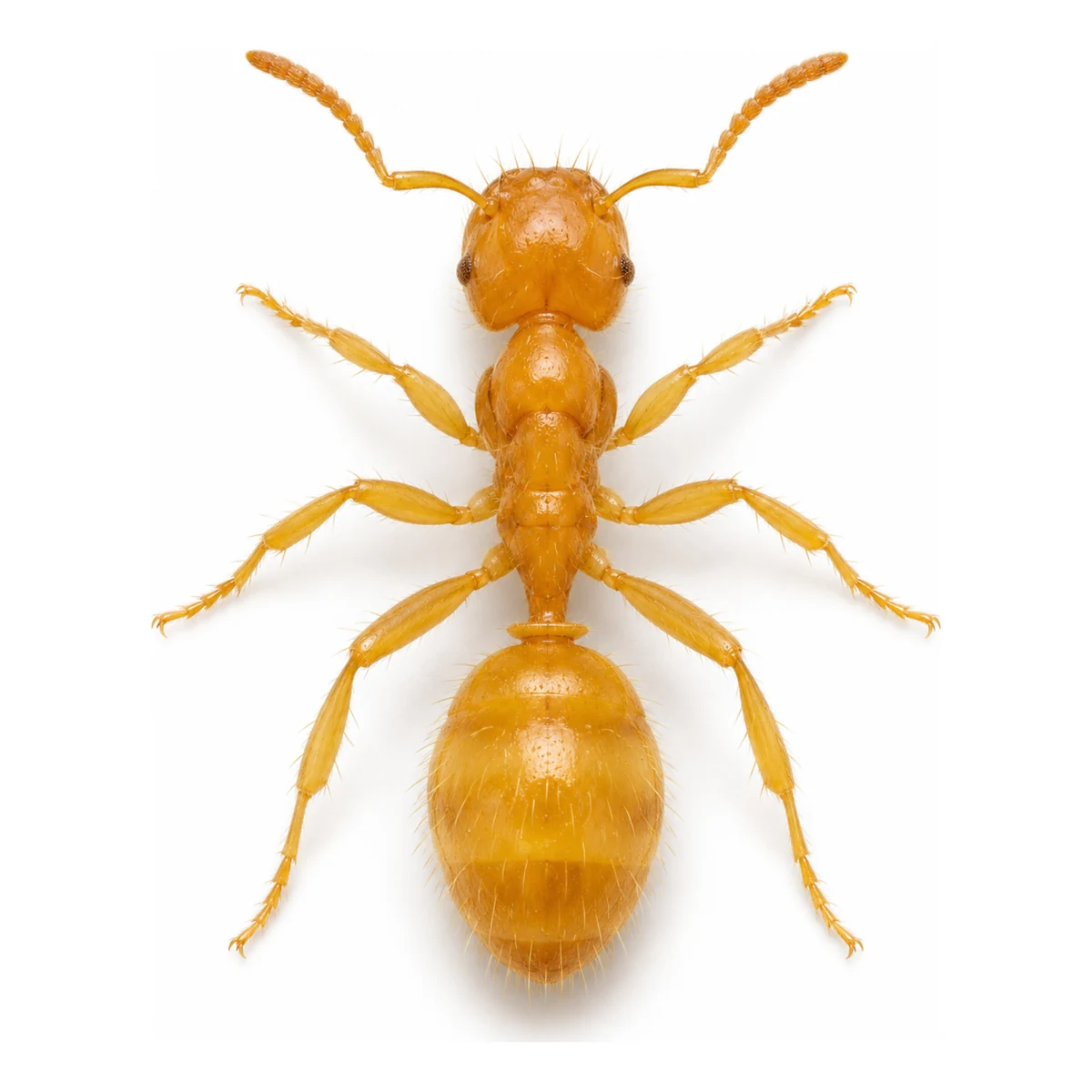
A yellow to orange-amber ant with small eyes that gives off a strong lemon or citronella smell when crushed. Workers rarely come above ground. Most people only see the winged swarmers pouring out of a basement wall, and they're often mistaken for termites.
Size: 1/8 to 3/16 inch
Where you'll find them: Underground near foundations, often swarming out of basements, crawl spaces or slab cracks in late summer and fall
Why it matters: Harmless to the house. They don't damage wood, but the swarms can be alarming. Correct ID saves an unneeded termite treatment.
8. Field Ant
Formica species
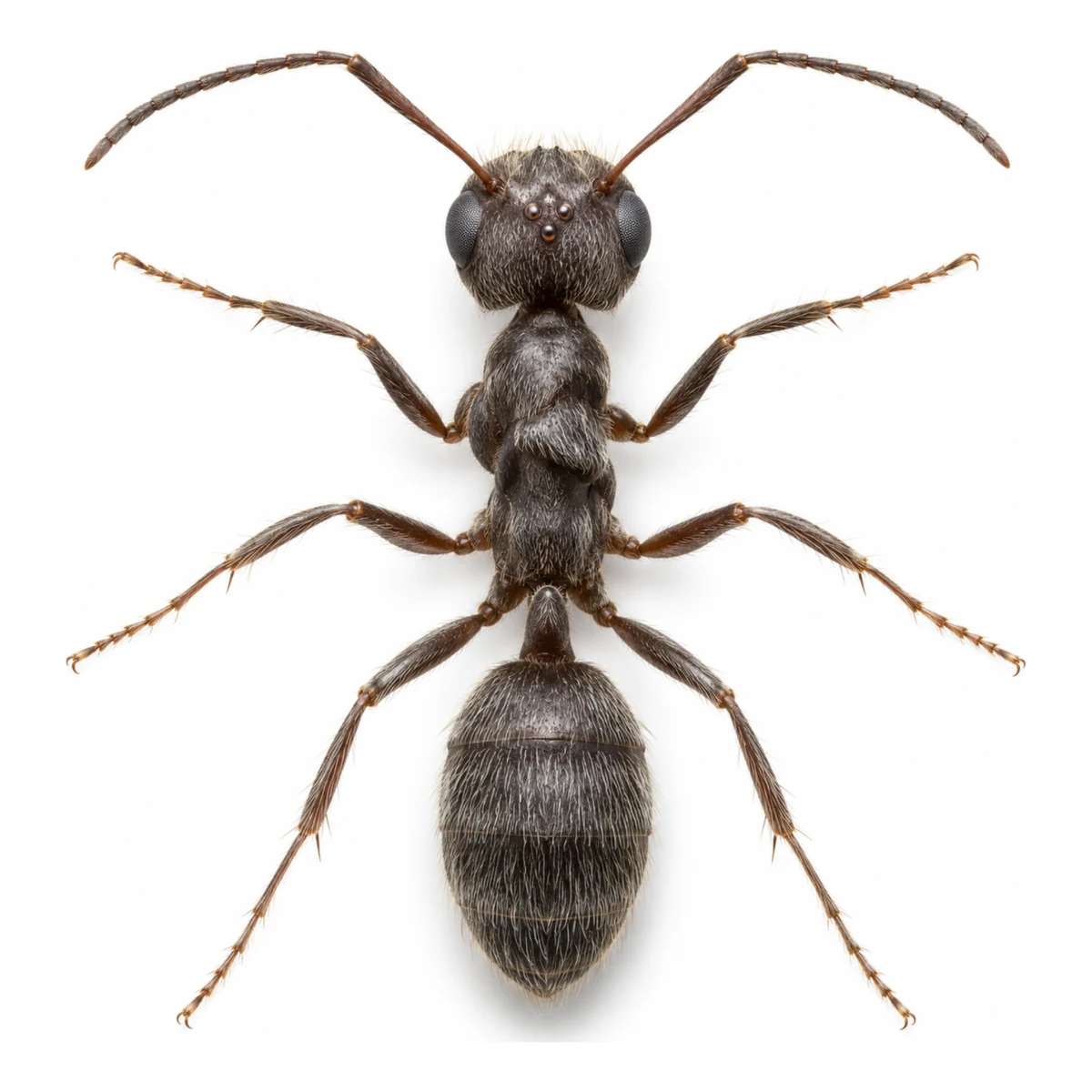
A medium to large ant that may be black, brown, reddish or a mix, with one node at the waist. It's often confused with the carpenter ant, but its back is uneven instead of smoothly rounded. Some kinds build big mounds in lawns and pastures.
Size: 1/8 to 5/16 inch
Where you'll find them: Lawns, fields and along driveways and fence lines, often building large dirt mounds
Why it matters: Mostly an outdoor nuisance. Mounds damage lawns and mowers, and they can bite and spray acid if the mound is disturbed.
Life Cycle of Ants
- 1
Egg
The queen lays tiny white eggs. In some kinds she lays thousands a week, and she can live for years.
- 2
Larva
Legless, grub-like larvae hatch and are fed by worker ants. This is when the colony needs the most protein.
- 3
Pupa
Larvae turn into pupae, sometimes inside a silk cocoon. These are the 'ant eggs' people see when a nest is opened.
- 4
Adult
Most adults are sterile female workers. Once a colony is mature it sends out winged males and queens to start new colonies.
Mistaken Identity: Ant Look-Alikes
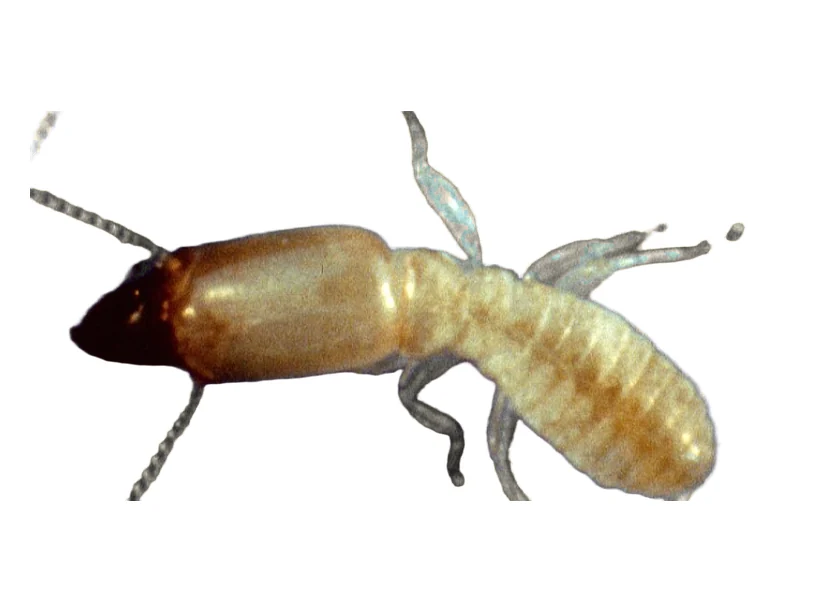
Termites
Swarming termites have a thick waist, straight antennae and four equal wings. See the comparison above.
Velvet Ants
Fuzzy red-and-black insects that look like big ants but are actually wingless wasps. Females give a very painful sting.
Antlike Beetles
Small beetles with narrow 'waists' that look like ants, but their hard wing covers and straight-seamed back give them away.
Winged Ants vs. Flying Termites
If you find wings on a windowsill, check whether they're all the same length. Equal wings mean termites.
Signs of a Ant Problem
- Trails of ants along baseboards, countertops, windowsills or the edge of the kitchen floor
- Ants gathering around pet food bowls, trash cans or sticky spots
- Small piles of soil in cracks in the driveway, patio or basement slab
- Piles of coarse sawdust near windows, doors or baseboards, a sign of carpenter ants
- Large ants coming out at night, especially in spring
- Winged ants inside the house, which usually means there's a nest in the structure
How to Keep Ants Out
- Wipe up crumbs and spills right away and keep sugar, honey and syrup sealed.
- Store pet food in sealed containers and don't leave bowls out overnight.
- Fix leaks and replace rotting or water-damaged wood, which attracts carpenter and acrobat ants.
- Trim branches and shrubs so they don't touch the roof or siding.
- Keep mulch a few inches back from the foundation and avoid piling it deep against the house.
- Seal cracks around windows, doors, pipes and utility lines.
- Store firewood away from the house and off the ground.
How We Get Rid of Ants
We identify the ant first, because the right treatment depends on it. Then we track the trails back to the nest, inside or out.
For most kitchen ants we use slow-acting baits that workers carry back to the colony, plus a perimeter treatment outside to stop new ants from coming in. This avoids the colony-splitting problem that store-bought sprays can cause.
For carpenter ants we find and treat the nest directly, including satellite nests in the walls, and point out the moisture problem that drew them in. Regular quarterly service keeps new colonies from getting started.